Ever watched a TikTok where the creator jokes about “the algorithm”, breaks the fourth wall, or makes fun of the exact trend they’re participating in? Someone in the comments probably called it “meta”.
The meta-meaning slang trend has exploded across social media, gaming, meme culture, and online communities. It’s one of those internet words that sound confusing at first — but once you get it, you start seeing it everywhere.
And honestly? Gen Z uses it constantly.
Whether you’re scrolling through Reddit, chatting on Discord, watching ironic memes, or trying to decode social media humour, understanding “meta” helps you keep up with modern online conversations. It’s become shorthand for self-aware humour, layered jokes, and content that knows exactly what it’s doing.
In this guide, updated for 2026, you’ll learn:
- What “meta” actually means in slang
- Where the term came from
- How people use it online
- Real text and meme examples
- Common misunderstandings
- Related internet slang terms you should know
## What Does “Meta” Mean? (Definition + Origin)
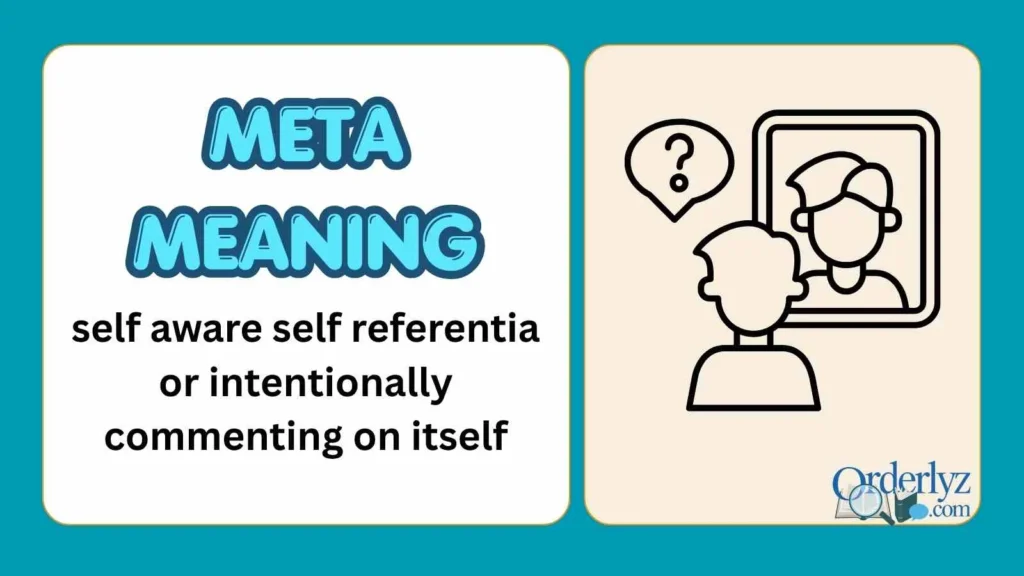
Quick Answer: In slang, “meta” means self-aware, self-referential, or intentionally commenting on itself. It’s commonly used online to describe jokes, memes, games, or posts that acknowledge their own format or behaviour.
The word “meta” originally comes from Greek, meaning “beyond” or “about itself”. But internet culture gave it a whole new personality.
Online, “meta” became popular in the following:
- Gaming communities
- Reddit forums
- Meme culture
- Film discussions
- Social media commentary
Today, people use it when content becomes aware of itself.
For example:
- A meme about memes = meta
- A TikTok joking about TikTok trends = meta
- A movie character realizing they’re in a movie = meta
It’s basically internet shorthand for the following:
“This thing knows exactly what it is.”
Pronunciation Guide
“Meta” is pronounced:
MEH-tuh
Not “mee-ta” or “met-ah”.
How the Meaning Evolved
Originally, “meta” was used more in academic or gaming spaces. Competitive gamers would talk about “the meta”, meaning the most effective strategy available.
But social media transformed the slang meaning.
Now it’s heavily tied to:
- irony
- self-awareness
- satire
- layered humor
- breaking the fourth wall
That’s why younger users throw it around constantly in meme discussions.
How to Use “Meta” Correctly in Texts & Chat
Using “meta” correctly is mostly about recognising self-aware humour.
Common Contexts
People use “meta” when something is:
- references itself
- mocks its own category
- intentionally acknowledges online behavior
- becomes “aware” of the audience
Example:
“A podcast episode about making podcasts is so meta.”
Tone & Vibe
“Meta” usually sounds like this:
- humorous
- clever
- ironic
- sarcastic
- internet-savvy
It’s casual slang, not formal language.
Platform-Specific Usage
SMS & Group Chats
Usually used casually:
“Bro, this conversation is getting meta.”
TikTok
Extremely common in comments:
“This trend making fun of trends is peak meta.”
Discord
Popular in gaming and meme servers:
“The admin made a meme about the server drama. Meta af.”
Reddit LOVES meta-humour.
Entire subreddits are built around it.
Instagram & X
Often appears in captions or reaction comments:
“Posting a selfie about posting selfies is crazy meta.”
When NOT to Use “Meta”
Avoid using it:
- in formal emails
- professional reports
- academic writing (unless discussing media theory)
- with people unfamiliar with internet slang
Imagine emailing your boss:
“This quarterly review feels meta.”
Yeah. Probably not.
Formatting Tips
Most people write it:
- lowercase (“meta”)
- without punctuation emphasis
- Sometimes paired with emojis like
- 😂
- 🧠
- 🤯
- 🎭
Examples:
“This meme is too meta 😂”
“Okay, that joke was actually meta ngl.”
Real Conversation Examples Using “Meta”
Between Friends
Alex: “You made a meme about our group chat?”
Jordan: “Yeah, and now we’re discussing the meme inside the group chat.”
Alex: “That’s wildly meta.”
What it conveys:
Self-aware humour and layered joking.
In a Dating Chat
Taylor: “You flirt by joking about flirting.”
Chris: “It’s called meta rizz.”
Taylor: “That shouldn’t work… but it does.”
What it conveys:
Playful irony and self-awareness.
In a Gaming Discord
User 1: “The game added a tutorial mocking tutorials.”
User 2: “The devs went full meta.”
What it conveys:
Developers intentionally referencing gaming culture.
Family Group Chat
Mom: “Why are you kids sending memes about family group chats?”
Daughter: “Because it’s meta, Mom.”
What it conveys:
Generational humour differences.
At Work (Casual Slack Chat)
Coworker: “We’re having a meeting about too many meetings.”
You: “That’s painfully meta.”
What it conveys:
Humorous self-reference.
Common Mistakes & Misunderstandings
1. Confusing “Meta” With the Company
A lot of people now associate “Meta” only with Meta Platforms.
But the slang “meta” existed long before the company rebrand.
Context matters.
Example:
- “Meta is ruining Facebook.” → company
- “This meme is meta.” → slang
2. Thinking It Just Means “Popular”
In gaming, “the meta” can mean the strongest strategy.
But in internet slang, “meta” usually means the following:
- self-aware
- self-referential
- ironic
Different meanings. Same word.
3. Overusing It
Not every joke is meta.
People sometimes label anything funny or ironic as “meta”, even when it isn’t self-referential.
A regular meme ≠ meta meme.
A meme ABOUT memes? That’s meta.
Generational Confusion
Older generations may hear “meta” and think:
- business branding
- technology
Gen Z usually thinks:
- ironic humor
- meme culture
- online self-awareness
That difference creates some hilarious misunderstandings online.
“Meta” Across Different Platforms & Demographics
Gen Z Usage
Gen Z uses “meta” constantly in the following:
- TikTok comments
- ironic memes
- reaction posts
- creator culture jokes
For younger users, it signals the following:
“I understand internet humour deeply.”
It’s basically a badge of online awareness.
Millennials
Millennials often use “meta” in the following:
- Reddit discussions
- gaming culture
- TV/movie commentary
They helped popularise the term before TikTok exploded.
Older Generations
Older users may know the academic version of “meta”, but not the meme version.
That’s why phrases like
“This meme is so meta.”
can sound confusing outside internet culture.
Is “Meta” Safe for Work?
Usually yes.
“Meta” itself isn’t offensive. But the conversations around it can become sarcastic or edgy depending on the community.
In casual work chats? Fine.
In formal presentations? Maybe skip it.
Viral Trends That Popularized It
Meta-humour became huge because of the following:
- TikTok irony culture
- self-aware memes
- fourth-wall-breaking content
- parody creators
- reaction videos
Modern internet humour is incredibly self-referential now. “Meta” became the perfect label for it.
Related Slang, Abbreviations & Alternatives
| Term | Meaning |
|---|---|
| Irony | Saying or showing the opposite intentionally |
| Satire | Humor used to criticize something |
| Fourth Wall Break | When media acknowledges the audience |
| Self-aware | Conscious of how something appears |
| Dank Meme | Absurd or layered meme humor |
| Brainrot | Chronically online humor culture |
| NPC | Someone acting generic or robotic |
| Canon Event | An unavoidable life moment online |
| POV | “Point of view” style content |
| Shitposting | Intentionally low-quality absurd humor |
You could also say:
- “self-aware”
- “ironic”
- “layered humor”
- “inside joke energy”
Depending on the context.
FAQs:
### Does “meta” always mean funny?
No. Meta content is often humorous, but it can also be serious, analytical, or artistic. The key idea is self-awareness or self-reference.
What does “too meta” mean?
“Too meta” usually means something has become excessively self-aware or overly complicated with references about itself.
Example:
“The movie spent more time joking about movies than telling a story.”
What is a meta meme?
A meta meme is a meme about memes, meme formats, or internet behaviour itself. It comments on online culture while participating in it.
Why do gamers say “the meta”?
In gaming, “the meta” refers to the most effective strategy, character, or playstyle currently dominating the game.
That’s slightly different from slang usage.
Is “meta” still popular in 2026?
Absolutely. If anything, internet culture has become even more meta. TikTok, Discord, and meme communities constantly recycle self-aware humour and trend commentary.
Conclusion:
The meta-meaning slang trend perfectly captures modern internet culture: ironic, self-aware, and endlessly online.
Once you understand what “meta” means, you’ll start noticing it everywhere — TikTok trends mocking trends, memes about memes, and creators joking about the algorithm while feeding it at the same time.
That’s the internet now. Very self-aware, very chaotic. Very meta.
And honestly? That’s probably not changing anytime soon.
Drop your favourite internet slang term in the comments below — or send this guide to someone who still thinks “meta” only means Facebook.

Hi, I’m Sophia Brownn, the creator behind Orderlyz.com, where words, meanings, and expressions are made simple, clear, and easy to understand.
I believe language shouldn’t feel confusing or overwhelming. In a world where new slang, trends, and expressions appear every day, my goal is to bring order to the chaos. I break down meanings in a way that feels natural, quick, and actually useful in real life conversations.