Ever seen someone reply “get bent” in a text or comment and wondered if it was a joke or a full-on insult?
You’re not alone. Slang evolves quickly, and phrases like ‘get bent’ can be confusing, especially when the tone isn’t obvious. One minute it’s playful banter, the next it feels like someone just snapped at you.
Understanding modern slang isn’t just about staying trendy; it helps you avoid awkward misunderstandings, especially in chats, social media, or gaming spaces.
In this guide, you’ll learn what “get bent” means, where it came from, how to use it correctly, and when to avoid it.
Plus, we’ll break down real-life examples so you never misread the vibe again.
What does ‘get bent’ mean?
Definition:
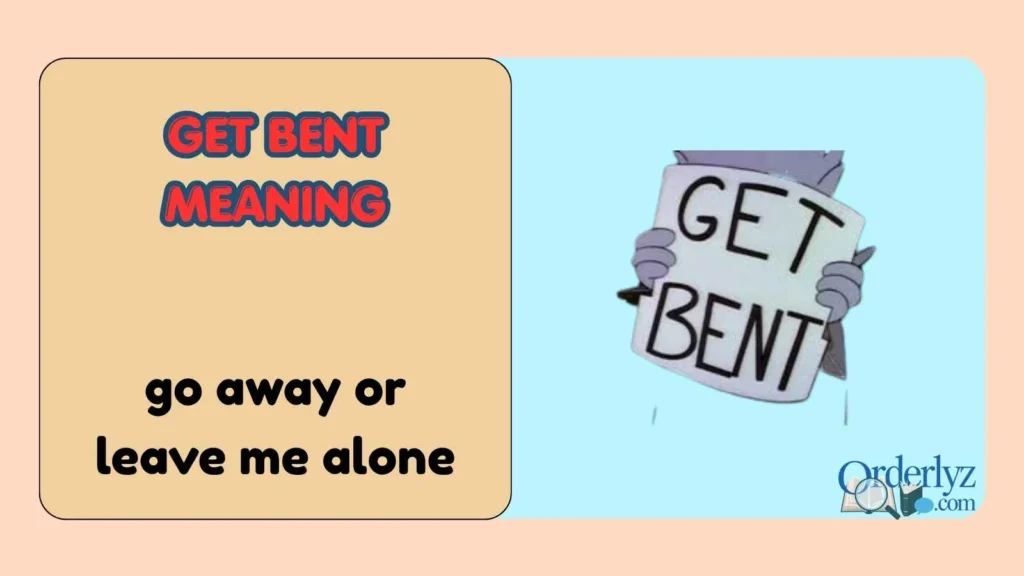
“Get bent” is a slang phrase used to dismiss someone rudely or tell them to go away. It often carries annoyance, frustration, or sarcasm.
Quick Answer:
“Get bent” means “go away” or “leave me alone,” usually in a rude or irritated tone.
Origin & History
The phrase likely emerged in mid-20th century American slang, possibly as a toned-down alternative to harsher insults. Some theories suggest it evolved from mechanical or physical imagery (something being “bent” out of shape), symbolising dismissal or rejection.
It gained traction in casual speech and later spread through online culture, especially forums, gaming chats, and social media.
Evolution Over Time
- 1960s–80s: Used mostly as a blunt insult
- 1990s–2000s: Became more casual and sarcastic
- Today: Can range from playful teasing to outright hostility depending on tone
Pronunciation
Simple and direct:
get bent (rhymes with “sent”)
How to Use “Get Bent” Correctly in Texts & Chat
Using “get bent” isn’t complicated, but using it appropriately is.
Tone & Context
- 😤 Annoyed: “Get bent, I’m not doing that.”
- 😏 Sarcastic: “Yeah, sure… get bent.”
- 😂 Playful (rare): Among close friends joking around
Platform-Specific Usage
- SMS / WhatsApp: Direct and often harsh
- Instagram / TikTok: Usually sarcastic or comedic
- Discord / Gaming: Common in competitive banter
- Reddit / X: Often used in arguments or debates
When to Use It
- With close friends who understand your tone
- In casual or humorous exchanges
- During light roasting or banter
When NOT to Use It
- ❌ Professional settings
- ❌ Conversations with strangers
- ❌ Sensitive discussions
- ❌ Formal communication
Formatting Tips
- Lowercase: “get bent” (casual tone)
- ALL CAPS: “GET BENT” (angry or aggressive)
- With emojis:
- 😒 = annoyed
- 😂 = joking
- 😤 = frustrated
Real Conversation Examples Using “get bent”
1. Between Friends (Playful)
Friend 1: “You still owe me lunch.” 😏
Friend 2: “Get bent 😂”
👉 Emotion: Light teasing, not serious.
2. In a Group Chat (Annoyed)
Person A: “Can you do my part too?”
Person B: “Get bent; do it yourself.”
👉 Emotion: Frustration and refusal.
3. Dating Scenario (Sarcastic)
Date: “You forgot our plans again.”
You: “Wow… become bent.”
👉 Emotion: Defensive, slightly hostile.
4. Workplace Chat (Inappropriate)
Colleague: “Can you finish this report?”
Reply: “Become bent.”
👉 Emotion: Disrespectful. This could cause serious issues.
5. Gaming Chat (Competitive)
Player 1: “You only won because of luck.”
Player 2: “Get bent; that was skill.”
👉 Emotion: Competitive banter.
Common Mistakes & Misunderstandings
1. Assuming It’s Always a Joke
Some people use it playfully, but many don’t. Context is everything.
2. Using It in Formal Settings
This is a major mistake. It’s too rude for professional or polite conversations.
3. Generational Confusion
- Gen Z: May use it sarcastically
- Millennials: Understand both tones
- Older generations: Often interpret it as purely offensive
4. Cultural Differences
In some regions, it may sound harsher or unfamiliar, increasing the chance of misunderstanding.
How to Clarify
If unsure, ask:
“Hey, were you joking or serious?”
“Get bent.” Across Different Platforms & Demographics
Gen Z vs Millennials
- Gen Z: Uses it ironically or humorously
- Millennials: Use it more literally
- Older users: Rarely use it
Platform Trends
- TikTok: Mostly sarcastic comments
- Instagram: Used in memes and replies
- Discord: Common in gaming culture
- Reddit: Seen in debates or arguments
Formality Level
- ❌ Not formal
- ❌ Not workplace-safe
- ✔ Casual, slang-heavy environments only
Viral Popularity
The phrase resurfaces periodically through memes and retro slang trends, especially when older expressions become “cool again.”
Related Slang, Abbreviations & Alternatives
Here are similar expressions you might see:
| Slang Term | Meaning |
|---|---|
| Get lost | Go away politely |
| Buzz off | Slightly rude dismissal |
| Go away | Neutral version |
| Leave me alone | Direct but softer |
| Take a hike | Mildly sarcastic |
| Back off | Defensive tone |
| Chill out | Calming someone down |
| Whatever | Dismissive but less harsh |
| Shut up | More aggressive |
| Go to hell | Stronger insult |
👉 Learn more about related slang like “whatever meaning” or “chill out meaning” to expand your vocabulary.
FAQs:
What does ‘get bent’ mean in texting?
In texting, “get bent” usually means “go away” or expresses annoyance. Tone depends on context; it can be sarcastic among friends or rude in arguments.
Is ‘get bent’ a bad word?
It’s not a curse word, but it’s still considered rude. Use it carefully, especially around people you don’t know well.
Can ‘get bent’ be used in a joking way?
Yes, among close friends it can be playful. However, without clear tone or emojis, it may come across as offensive.
Why do people say, “get bent”?
People use it to dismiss others, show frustration, or add humour in sarcastic exchanges. It’s often quicker than explaining feelings.
What’s a polite alternative to getting bent?
Polite alternatives include “Please stop”, “I’m not interested”, or “Let’s drop it.”
Conclusion:
Slang like ‘get bent’ may seem simple, but the tone changes everything. What sounds like a joke in one chat can feel like an insult in another.
At its core, “get bent” is a dismissive phrase, sometimes playful, often rude. Knowing when and where to use it helps you avoid awkward moments (or accidental drama).
If you’re ever unsure, take the cautious approach. There are plenty of softer ways to say the same thing without risking offence.
Curious about more slang like this? Drop your favourite text abbreviation below, or explore more modern phrases to stay ahead of the conversation.

Hi, I’m Sophia Brownn, the creator behind Orderlyz.com, where words, meanings, and expressions are made simple, clear, and easy to understand.
I believe language shouldn’t feel confusing or overwhelming. In a world where new slang, trends, and expressions appear every day, my goal is to bring order to the chaos. I break down meanings in a way that feels natural, quick, and actually useful in real life conversations.