You’ve probably seen someone type “Salaam” in a WhatsApp message, Instagram comment, or TikTok caption and wondered: What exactly does it mean? Is it just a greeting? A religious phrase? Or something deeper?
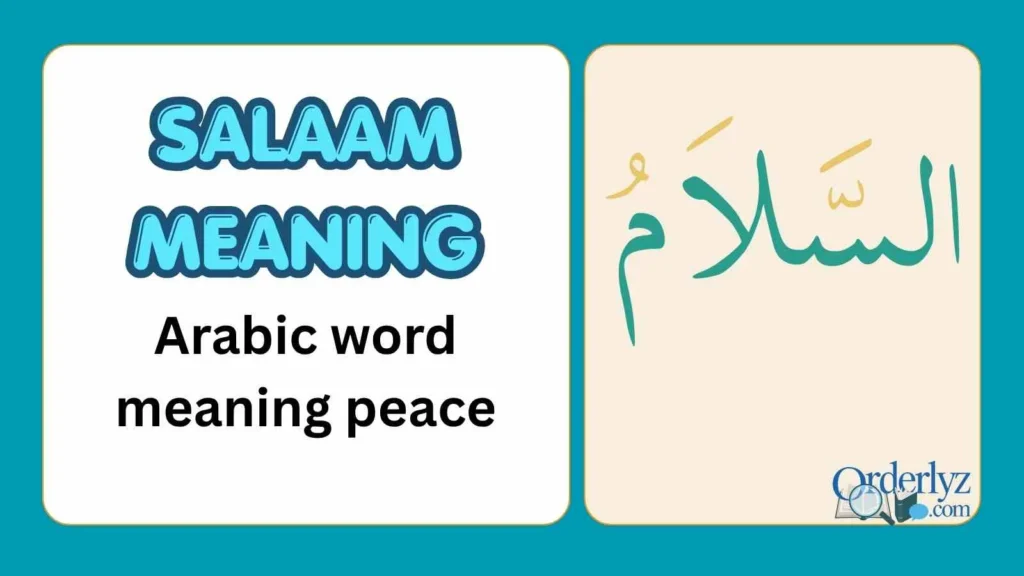
The short answer: Salaam means “peace.” But in real-world conversations, it carries far more warmth and cultural meaning than a simple “hello.”
Today, the word appears everywhere — from family group chats and gaming communities to YouTube comments and global social media conversations. As online communication becomes more multicultural, understanding greetings like Salaam matters more than ever.
In this updated-for-2026 guide, you’ll learn the true meaning of Salaam, where it comes from, how people use it online, when it’s appropriate, and how to respond naturally without sounding awkward. You’ll also see real conversation examples, common misunderstandings, and related expressions people often confuse with it.
What Does “Salaam” Mean? (Definition + Origin)
Quick Answer:
Salaam is an Arabic word meaning “peace.” It’s commonly used as a greeting among Muslims and Arabic-speaking communities to wish peace, safety, and goodwill upon others.
The word comes from the Arabic root S-L-M, which is associated with peace, safety, and wholeness. It’s closely related to words like:
- Islam
- Muslim
- Salam or Salaam
The greeting became globally recognized through the phrase:
“Assalamu Alaikum” — meaning “Peace be upon you.”
Over time, many people shortened it casually to just “Salaam,” especially in texting and quick online conversations.
Pronunciation Guide
- Salaam = sah-LAHM
- Some spell it:
- Salam
- Salaam
- Salaaam (for emphasis online)
All versions generally carry the same meaning.
How the Meaning Evolved Online
Originally, Salaam was mainly used in religious and cultural settings. But social media changed that fast.
Today, people use it:
- As a casual greeting
- To sound warm and respectful
- In multicultural online spaces
- As part of identity and community expression
You’ll now spot Salaam in:
- TikTok captions
- Instagram DMs
- Discord servers
- YouTube comments
- Gaming chats
- International friend groups
And honestly? It often feels more personal than a plain “hey.”
How to Use “Salaam” Correctly in Texts & Chat
Using Salaam is pretty straightforward, but context matters.
Casual Usage
People commonly use Salaam:
- To greet friends
- To open conversations politely
- To show warmth and respect
- In Muslim family or community chats
Examples:
- “Salaam bro, you free later?”
- “Salaam everyone!”
- “Salaam auntie, how are you?”
Platform-Specific Usage
SMS & WhatsApp
Very common. Especially in family chats and international communities.
Example:
“Salaam, did you reach home safely?”
Instagram DMs
Often used as a friendly opener.
Example:
“Salaam! Loved your post.”
Discord & Gaming Chats
Used casually among Muslim gamers and multicultural communities.
Example:
“Salaam squad, ready for ranked?”
Reddit & Forums
Usually appears in community-based discussions.
Example:
“Salaam everyone, I have a question about fasting.”
X (Twitter)
Can appear in replies, captions, or solidarity posts.
Example:
“Salaam to everyone celebrating Eid today.”
When NOT to Use Salaam
While Salaam is friendly, it’s still culturally meaningful.
Avoid using it:
- Mockingly or sarcastically
- In offensive memes
- In inappropriate professional emails unless culturally expected
- Without respect for its background
For example, typing:
“Salaaaam losers 😂”
…might come across as disrespectful depending on the audience.
Is It Formal or Informal?
It can be both.
- Formal: Religious gatherings, elders, ceremonies
- Informal: Texts, group chats, online gaming
That flexibility is part of why the greeting survived for centuries.
Emoji Pairings
People often pair Salaam with:
- 🤲
- ✨
- 🌙
- ❤️
- ☪️
Example:
“Salaam everyone 🌙✨”
Real Conversation Examples Using “Salaam”
Between Friends
Aisha: “Salaam! You coming tonight?”
Mina: “Yep, just finishing work.”
What it conveys:
Warmth and familiarity. Softer than saying “Yo.”
In a Family Group Chat
Mom: “Salaam everyone, dinner at 8.”
Brother: “On my way!”
What it conveys:
Respectful family communication.
In Dating Conversations
Ahmed: “Salaam 😊 how was your day?”
Layla: “Pretty good actually.”
What it conveys:
Politeness mixed with friendliness.
In a Gaming Server
Player1: “Salaam team, who’s queueing?”
Player2: “I’m in.”
What it conveys:
Community bonding and identity.
In a Work Chat
Coworker: “Salaam, just checking if the report is ready.”
Manager: “Almost done.”
What it conveys:
Professional respect in culturally familiar environments.
Common Mistakes & Misunderstandings
1. Thinking Salaam Only Means “Hello”
Not exactly.
While it functions like “hello,” the deeper meaning is “peace.” That emotional layer matters culturally and spiritually.
2. Confusing Salaam With Goodbye
Some people assume Salaam means goodbye because it sounds ceremonial.
Actually, it’s primarily a greeting or blessing.
3. Assuming Only Muslims Can Say It
That’s a common misunderstanding online.
Many non-Muslims use Salaam respectfully:
- In multicultural friendships
- While traveling
- In interfaith communities
Intent and respect matter more than background.
Generational Differences
Gen Z
Uses Salaam casually online and in memes.
Millennials
Often use the full phrase “Assalamu Alaikum.”
Older Generations
May prefer formal pronunciation and etiquette.
This creates funny moments sometimes:
- Gen Z: “salaammm 😭”
- Grandma: “Please say the full greeting properly.”
Regional Differences
South Asia
Very common in Pakistan, India, and Bangladesh.
Middle East
Used daily in both formal and casual settings.
Western Countries
Often tied to Muslim identity and multicultural communities.
“Salaam” Across Different Platforms & Demographics
TikTok
On TikTok, Salaam appears in:
- Ramadan content
- Lifestyle vlogs
- Funny family skits
- “Muslim TikTok” culture
People often use it to create instant familiarity.
Instagram users commonly write:
- “Salaam everyone ❤️”
- “Salaam fam”
- “Eid Mubarak & Salaam”
It adds warmth to captions and DMs.
Discord & Gaming Communities
Gaming communities use Salaam similarly to:
- “Hey team”
- “What’s up everyone”
But it also signals shared culture or identity.
Is Salaam Safe for Work?
Usually yes — if used respectfully.
In professional Muslim-majority settings, it’s completely normal.
In highly formal corporate emails outside those environments, a neutral “Hello” may feel more appropriate.
Viral & Cultural Popularity
The global rise of Muslim creators, TikTok culture, and international online communities helped popularize Salaam beyond Arabic-speaking audiences.
Today, millions recognize the greeting even if they don’t speak Arabic.
That’s pretty impressive for a word thousands of years old.
Related Slang, Abbreviations & Alternatives
| Term | Meaning |
|---|---|
| Assalamu Alaikum | “Peace be upon you” |
| Wa Alaikum Assalam | Traditional response |
| Salam | Alternate spelling of Salaam |
| Eid Mubarak | Greeting used during Eid celebrations |
| Inshallah | “God willing” |
| Mashallah | Expression of admiration |
| Habibi | “My dear” or “my friend” |
| Akhi | “Brother” |
| Ukhti | “Sister” |
| Shukran | “Thank you” |
Similar Casual Greetings
- Hey
- Yo
- Peace
- What’s up
Opposite Tone
There’s no direct antonym, but rude or hostile greetings obviously carry the opposite vibe of Salaam’s peaceful intent.
FAQs:
What does Salaam literally mean?
Salaam literally translates to “peace” in Arabic. It’s commonly used as a greeting wishing safety, peace, and goodwill upon someone.
Is Salaam the same as Assalamu Alaikum?
Not exactly. Salaam is the shortened form, while Assalamu Alaikum means “peace be upon you” in full.
Can you say Salaam to non-Muslims?
Yes. Many people use Salaam respectfully across cultures and communities regardless of religion.
How do you reply to Salaam?
The traditional response is:
“Wa Alaikum Assalam”
This means:
“And peace be upon you too.”
Why do people type “salaam” online?
People use Salaam online because it feels warm, respectful, and culturally meaningful. It’s common in texting, social media captions, gaming chats, and community forums.
Conclusion:
Salaam is more than just a greeting. It’s a word built around peace, kindness, and human connection — which honestly explains why it still feels powerful in modern digital culture.
Whether you see it in a WhatsApp message, a TikTok comment, or a Discord server, understanding the meaning behind Salaam helps you communicate more naturally and respectfully online.
And now you know exactly how to use it without second-guessing yourself.
Got a favorite slang term or greeting you want decoded next? Drop it in the comments and keep exploring modern internet language.

Hi, I’m Sophia Brownn, the creator behind Orderlyz.com, where words, meanings, and expressions are made simple, clear, and easy to understand.
I believe language shouldn’t feel confusing or overwhelming. In a world where new slang, trends, and expressions appear every day, my goal is to bring order to the chaos. I break down meanings in a way that feels natural, quick, and actually useful in real life conversations.