You’ve probably heard someone say, “They’re our biggest rivals,” during a football match, gaming stream, school debate, or even a business meeting. Competition is everywhere. And the word “rival” sits right in the middle of it.
But what exactly does it mean?
The rival meaning goes beyond simply “someone you compete against”. A rival can motivate you, frustrate you, challenge you, or even secretly make you better. From legendary sports rivalries to playful friend competitions on social media, the term shows up in everyday conversations more than people realise.
This guide explains everything in plain English. You’ll learn the true definition of rival, where the word came from, how people use it online and offline, common misunderstandings, modern slang usage, and real-life examples that actually make sense.
Updated for 2025: Includes modern digital culture, social media usage, and trending rivalry examples across gaming, sports, and internet communities.
What Does “Rival” Mean? (Definition + Origin)
A rival is a person, team, company, or group competing against another for the same goal, success, position, or attention.
The competition can be the following:
- Friendly
- Serious
- Professional
- Emotional
- Temporary
- Long-term
Quick Answer
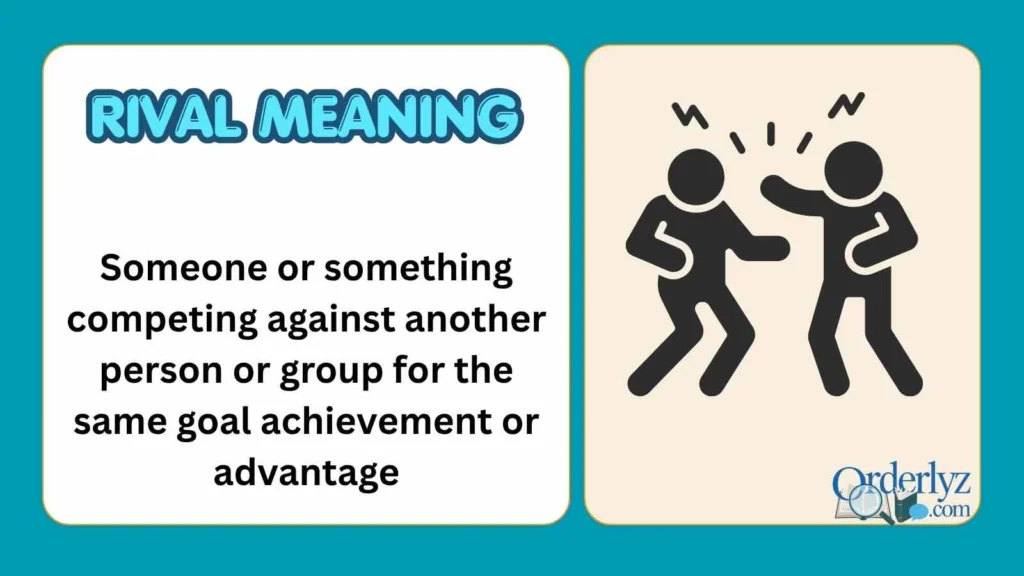
Rival meaning: Someone or something competing against another person or group for the same goal, achievement, or advantage.
Pronunciation Guide
‘Rival’ is pronounced:
RYE-vuhl
Origin of the Word “Rival”
The word comes from the Latin word ‘rivalis’, which originally referred to people using the same river. Over time, the meaning evolved into people competing over shared resources, opportunities, or goals.
Pretty dramatic evolution for a river-related word.
How the Meaning Changed Over Time
Centuries ago, rivalries were mostly tied to the following:
- Politics
- Territory
- Trade
- Power
Today, rivalry exists everywhere:
- Sports
- Gaming
- Business
- Relationships
- Social media
- Streaming culture
- Even meme pages fighting for followers
How to Use “Rival” Correctly in Texts & Chat
The word “rival” usually describes competition, tension, or comparison.
Common Everyday Usage
- “They’re our school rivals.”
- “That brand is a major rival to Apple.”
- “My cousin is basically my gaming rival.”
- “Those two creators are rivals on TikTok.”
Emotional Tone
“Rival” can feel
- Competitive
- Playful
- Respectful
- Intense
- Dramatic
Sometimes all at once.
Platform-Specific Usage
SMS & WhatsApp
Usually casual and personal:
- “You’re my gym rival now 😂”
Often appears in:
- Sports captions
- Fitness content
- Brand comparisons
- Friendly roasting
TikTok
TikTok loves rivalries.
Examples include:
- Streamer rivalries
- Gaming beef
- “Who did it better?” trends
- Fan wars between creators
Discord
Gaming communities constantly use “rival” for the following:
- Clan competitions
- Ranked matches
- Tournament enemies
More analytical:
- “Who is Marvel’s biggest rival?”
- “Which company rivals Tesla?”
When NOT to Use “Rival”
Avoid using “rival” when there’s no actual competition involved.
Example:
❌ “My rival neighbour borrowed sugar.”
That’s just… your neighbour.
Also avoid confusing:
- Rival = competition
- Enemy = hostility or hatred
Huge difference.
Formatting Tips
People sometimes emphasise rivalries with:
- ALL CAPS
- Fire emojis 🔥
- Sports emojis 🏆
- Side-eye emojis 👀
Examples:
- “That’s our RIVAL school.”
- “The rivalry is getting serious 🔥.”
Real Conversation Examples Using “Rival”
Between Friends
Sam: “You beat my high score again?”
Leo: “Sorry, bro, I’m officially your rival now.”
Meaning: Friendly competition with humour and mutual respect.
In Sports
Commentator: “These teams have been rivals for over 20 years.”
Meaning: Long-standing competitive history.
In a Work Chat
Employee: “Our biggest rival just launched a cheaper product.”
Meaning: Business competition between companies.
In Dating
Mia: “Why are you suddenly dressing better?”
Ethan: “Because your ex feels like my rival.”
Meaning: Emotional or romantic competition.
Gaming Example
Player 1: “Your squad keeps taking our territory.”
Player 2: “That’s what rivals do.” 😎
Meaning: Competitive but playful gaming interaction.
Common Mistakes & Misunderstandings
1. Confusing Rival With Enemy
This is the biggest mistake.
A rival competes with you.
An enemy actively dislikes or wants to harm you.
You can respect a rival. Sometimes you even admire them.
Enemies? Different story.
2. Assuming Rivalries Must Be Negative
Not always.
Healthy rivalries often:
- Improve performance
- Build motivation
- Create respect
- Push growth
Some of the best athletes in history became legends because of rivals.
3. Overusing the Word
Not every disagreement creates a rivalry.
If two people argued once in a YouTube comment section, they’re probably not lifelong rivals.
Internet drama escalates fast, though.
Generational Differences
Gen Z
Uses “rival” playfully:
- “My sleep schedule is my rival.”
- “Final exams are my biggest rival.”
Very meme-friendly.
Millennials
Usually use it for:
- Career competition
- Sports teams
- Business brands
Older Generations
Often associate rivalry with:
- Traditional sports
- Historical competition
- Politics or business
Cultural Differences
In some cultures, rivalry is seen as healthy motivation.
In others, intense competition may feel aggressive or disrespectful.
Context matters a lot.
“Rival” Across Different Platforms & Demographics
TikTok
Rivalries drive engagement.
Popular rivalry content includes:
- “Which singer is better?”
- Beauty creator comparisons
- Sports debates
- Gaming challenge wars
TikTok algorithms basically love conflict and competition.
You’ll often see rivalry in the following:
- Sports pages
- Fitness transformations
- Brand comparisons
- Influencer drama
Captions like:
- “The rivalry continues 👀”
- “Facing our biggest rivals tonight.”
Discord
Rivalries are huge in the following:
- Esports
- Ranked games
- Roleplay servers
- Competitive clans
Sometimes playful. Sometimes absolutely chaotic.
Reddit users discuss rivals in:
- Tech
- Finance
- Sports
- Anime fandoms
- Gaming franchises
Example:
“Xbox and PlayStation remain major rivals.”
Is “rival” formal or informal?
It works in both settings.
Formal Usage
- Business reports
- Journalism
- Sports commentary
Informal Usage
- Memes
- Gaming chats
- Friend groups
- Social media jokes
Rival vs Competitor vs Enemy
| Word | Meaning | Tone |
|---|---|---|
| Rival | Someone competing with you | Competitive |
| Competitor | Business or professional competition | Neutral |
| Enemy | Someone hostile or harmful | Negative |
| Opponent | Someone on the other side of a contest | Neutral |
| Challenger | Someone trying to defeat the leader | Motivational |
Related Slang, Abbreviations & Alternatives
| Term | Meaning |
|---|---|
| Opponent | Person facing another in competition |
| Competitor | Business or performance rival |
| Nemesis | A powerful long-term rival |
| Frenemy | Friend who also acts competitively |
| Challenger | Someone attempting to win |
| Arch-rival | Biggest or most famous rival |
| Underdog | Weaker competitor expected to lose |
| Beef | Ongoing conflict or drama |
| Clash | Direct competition or conflict |
| Showdown | Final intense competition |
Related Reading Opportunities
- Learn more about the meaning of ‘nemesis’
- Explore competitor vs rival differences
- Read about internet slang terms
- Understand “beef” in online culture
- Discover gaming slang explained
FAQs:
What does ‘rival’ mean in simple words?
A rival is someone competing against another person or group for the same goal, success, prize, or attention. Rivalries can happen in sports, business, gaming, school, and even friendships.
Is a rival always an enemy?
No. Rivals compete, but they don’t always hate each other. Many rivalries involve respect, admiration, or friendly competition.
What is a famous example of rivals?
Examples include:
- Coca-Cola vs Pepsi
- Real Madrid vs Barcelona
- Xbox vs PlayStation
These rivalries became famous because both sides compete for fans, sales, or victories.
Can friends be rivals?
Absolutely. Friends often become rivals in sports, gaming, school grades, or fitness challenges. Friendly rivalry can actually strengthen relationships.
What is the difference between rival and competitor?
A competitor usually refers to business or market competition, while a rival can involve emotional, personal, social, or cultural competition too.
Is ‘rival’ a negative word?
Not necessarily. Rivalries can be healthy and motivating. The tone depends on context and behaviour.
Why do people enjoy rivalries?
Rivalries create excitement, emotional investment, and motivation. Humans naturally enjoy competition and dramatic storytelling.
Conclusion:
The rival meaning is all about competition, challenge, and comparison. A rival pushes you to improve, work harder, or prove yourself — whether that happens in sports, gaming, business, school, or social media.
Not every rivalry is toxic. Some become legendary because both sides elevate each other. Honestly, a little healthy competition can make life more interesting.
From TikTok creator drama to billion-dollar brand battles, rivalries shape modern culture more than ever.
Drop your favourite rivalry in the comments below. Sports teams? Gaming clans? Fast food chains? The internet loves a good debate.

Hi, I’m Sophia Brownn, the creator behind Orderlyz.com, where words, meanings, and expressions are made simple, clear, and easy to understand.
I believe language shouldn’t feel confusing or overwhelming. In a world where new slang, trends, and expressions appear every day, my goal is to bring order to the chaos. I break down meanings in a way that feels natural, quick, and actually useful in real life conversations.