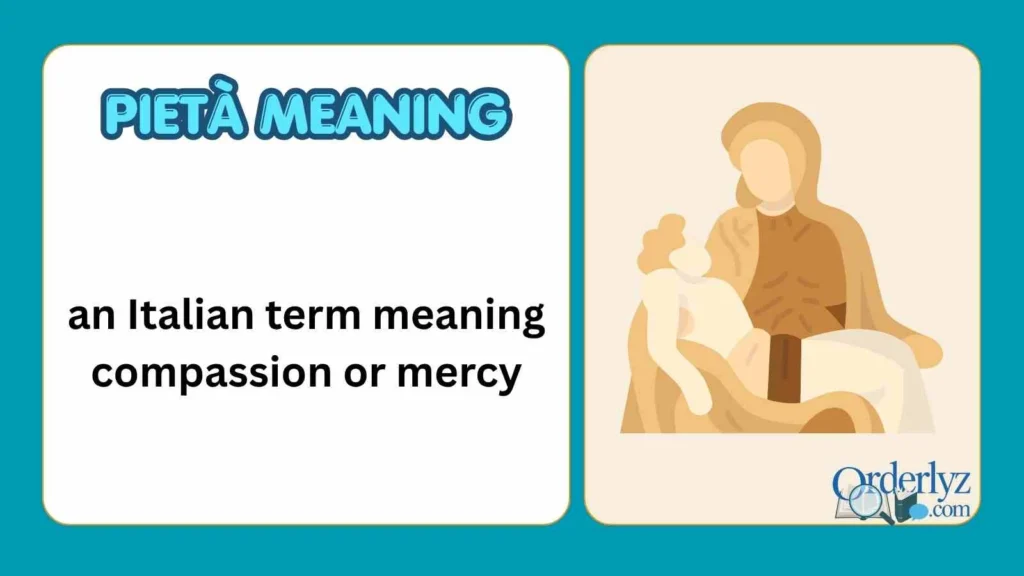
You’ve probably seen the image before — a grieving mother holding the body of her son in a heartbreaking pose that somehow feels both tragic and peaceful at the same time.
That image is called the Pietà.
And even if you don’t recognise the name immediately, the symbolism behind it appears everywhere today:
- movies
- photography
- fashion editorials
- TikTok symbolism breakdowns
- religious art
- emotional storytelling online
Understanding ‘pieta’ meaning helps you decode one of the most powerful artistic and emotional symbols in history.
At its core, Pietà represents compassion, sorrow, sacrifice, and unconditional love. But there’s a lot more depth behind the word than most quick definitions explain.
In this guide, you’ll learn:
- The exact meaning of Pietà
- Its religious and artistic origins
- Why Michelangelo’s Pietà became world-famous
- Modern cultural usage
- Symbolism people often miss:
- How the term appears online today
Updated for 2026, this is the complete beginner-friendly guide to Pietà’s meaning and symbolism.
What Does “Pietà” Mean? (Definition + Origin)
The word:
Pietà
comes from Italian and means the following:
- pity
- compassion
- mercy
In religious art, a Pietà specifically refers to:
The Virgin Mary holding the body of Jesus Christ after the crucifixion.
Quick Answer
‘Pietà’ is a In art, it describes emotional depictions of Mary mourning Jesus after his crucifixion, symbolising grief, sacrifice, love, and human compassion.
Origin of the Word Pietà
The word traces back to the following:
Latin: pietas
This ancient term represented the following:
- devotion
- loyalty
- duty
- compassion
- reverence
Over time, the Italian version “pietà” became closely connected to Christian religious art during the Middle Ages and the Renaissance.
Pronunciation Guide
‘Pietà’ is commonly pronounced:
“pee-eh-TAH”
or
“pyeh-TAH”
The final syllable carries the emphasis.
And yes, people online pronounce it differently all the time. Art historians are probably exhausted.
When Did Pietà Become Popular?
Pietà imagery became especially important during:
- the 14th century
- the Renaissance period
- Catholic devotional art movements
Artists used the Pietà to create an emotional connection between viewers and religious suffering.
The goal wasn’t just realism.
It was empathy.
How to Use “Pietà” Correctly in Conversations & Online
Unlike internet abbreviations like “NGL” or “FR”, Pietà is more of a cultural, artistic, and symbolic term.
Still, it appears surprisingly often online.
Common Ways People Use the Term
In Art Discussions
Example:
“Michelangelo’s Pietà is one of the greatest sculptures ever created.”
In Film & Photography Analysis
People often compare emotional visual compositions to a Pietà pose.
Example:
“That final movie scene looked like a modern Pietà.”
This usually means:
- sorrow
- emotional vulnerability
- sacrifice
- mourning imagery
In Fashion & Aesthetic Culture
On Instagram and Pinterest, Pietà references often appear in:
- gothic aesthetics
- dark academia
- emotional photography
- monochrome visual edits
In Religious Contexts
The Pietà remains a major symbol in the following:
- Christianity
- Catholic art
- devotional traditions
Platform-Specific Usage
Popular in:
- sculpture photography
- emotional art captions
- Renaissance aesthetic pages
TikTok
TikTok creators reference Pietà in:
- symbolism analysis videos
- movie scene breakdowns
- emotional storytelling edits
Common in:
- art history communities
- theology discussions
- Renaissance art threads
Huge presence in:
- visual mood boards
- sacred art collections
- gothic imagery
When NOT to Use Pietà Casually
Pietà has strong religious and emotional significance.
Using it carelessly or jokingly may feel disrespectful depending on the audience and context.
Some symbols carry historical weight. Pietà is definitely one of them.
Real Conversation Examples Using “Pietà”
Here’s how people naturally use the term in real conversations and online discussions.
Between Art Students
Student 1: “Why is Michelangelo’s Pietà so famous?”
Student 2: “The emotional detail is unbelievable.”
Emotional Meaning
The conversation focuses on artistic mastery and emotional realism.
On TikTok
Comment:
“This whole scene is giving modern Pietà energy.”
Emotional Meaning
The user compares an emotional visual composition to classical sorrow imagery.
In a Museum
Visitor: “I didn’t expect the Pietà sculpture to feel this emotional in person.”
Emotional Meaning
The artwork creates empathy, grief, and awe simultaneously.
Between Film Fans
Viewer 1: “That ending shot looked inspired by a Pietà composition.”
Viewer 2: “Yeah, especially the lighting and pose.”
Emotional Meaning
They’re recognising visual storytelling inspired by Renaissance art.
On Instagram
Caption:
“Soft grief. Quiet mercy. Pietà vibes.”
Emotional Meaning
The term conveys emotional vulnerability and tenderness.
Common Mistakes & Misunderstandings
‘Pietà’ sounds simple at first — until people realise it carries layers of artistic, religious, and emotional meaning.
1. Thinking ‘Pietà’ Refers Only to One Sculpture
Many people assume:
“The Pietà”
means only Michelangelo’s famous sculpture.
But “Pietà” is actually an entire artistic theme used by many artists across centuries.
Michelangelo’s version is simply the most iconic.
2. Assuming Pietà Only Means Sadness
Pietà definitely represents grief.
But it also symbolises:
- compassion
- mercy
- maternal love
- sacrifice
- emotional devotion
The emotional range is broader than simple sadness.
3. Confusing Pietà With General Religious Art
Not every image of Mary and Jesus is a Pietà.
The defining feature is the following:
Mary holding the body of Jesus after the crucifixion.
That specific emotional moment matters.
Generational Differences
Younger Audiences
Gen Z often encounters Pietà references through:
- TikTok symbolism videos
- aesthetic culture
- cinematic analysis
- visual storytelling
Older Generations
Older audiences may recognise Pietà from:
- church history
- art education
- religious traditions
- museum studies
Cultural Differences
In strongly Christian cultures, the Pietà may hold sacred meaning.
In online creative communities, it often functions more as the following:
- artistic symbolism
- emotional imagery
- aesthetic inspiration
Context changes interpretation.
Pietà Across Different Platforms & Demographics
TikTok & Short-Form Video
Pietà symbolism appears frequently in:
- emotional edits
- film analysis
- “cinema parallels”
- dramatic storytelling videos
Creators love visual symbolism with hidden emotional meaning.
Instagram Aesthetic Culture
‘Pietà’ references often appear alongside the following:
- black-and-white photography
- melancholy captions
- Renaissance-core aesthetics
- gothic visual themes
Academic & Art Communities
In formal settings, Pietà remains a major topic in the following:
- Renaissance studies
- religious iconography
- sculpture analysis
- theology
Is Pietà formal or informal?
The term itself is formal and historical.
But online culture sometimes uses it more casually in captions, references, and artistic mood boards.
Why Pietà Still Resonates Today
Even centuries later, Pietà imagery remains powerful because it captures universal emotions:
- grief
- compassion
- love
- loss
- vulnerability
People may not always know the historical background, but they instantly feel the emotion.
That’s the power of visual symbolism.
Related Artistic Terms & Alternatives
| Term | Meaning |
|---|---|
| Pietas | Latin root meaning ‘devotion’ and ‘duty’ |
| Renaissance Art | European artistic movement |
| Sacred Art | Religious artistic expression |
| Religious Iconography | Symbolic religious imagery |
| Madonna and Child | Mary with infant Jesus |
| Crucifixion Art | Artwork depicting Jesus’ death |
| Gothic Aesthetic | Dark emotional visual style |
| Compassion | Sympathy and mercy |
| Michelangelo | Renaissance sculptor of the famous Pietà |
| Devotional Art | Art intended for spiritual reflection |
Similar Emotional Themes
Pietà imagery often overlaps with:
- mourning
- tenderness
- sacrifice
- emotional protection
- maternal grief
Opposite Symbolic Energy
Compared to Pietà:
- victory statues feel triumphant
- heroic sculptures feel powerful
- Pietà feels intimate and emotionally fragile
Completely different emotional atmosphere.
Helpful External Resource
For historical and dictionary context, the Merriam-Webster ‘Pietà’ definition provides a concise explanation of the word and its origins.
Frequently Asked Questions About “Pietà Meaning”
What does Pietà mean?
‘Pietà’ is an Italian word meaning ‘pity’, ‘compassion’, or ‘mercy’. In art, it refers to depictions of Mary holding Jesus after the crucifixion.
Why is Michelangelo’s Pietà famous?
Michelangelo’s Pietà became famous because of its emotional realism, extraordinary craftsmanship, and influence on Renaissance sculpture.
What does Pietà symbolise?
Pietà symbolises grief, sacrifice, compassion, maternal love, and emotional devotion.
How do you pronounce Pietà?
Most people pronounce it:
“pee-eh-TAH”
or
“pyeh-TAH”
The final syllable receives emphasis.
Is Pietà only a religious symbol?
Primarily yes, but modern culture also uses Pietà imagery symbolically in film, photography, and emotional storytelling.
Why do people reference the Pietà online?
Online creators reference Pietà because it visually communicates deep emotional themes like sorrow, tenderness, sacrifice, and vulnerability.
Conclusion:
Understanding ‘pieta’ meaning opens the door to one of history’s most emotionally powerful artistic symbols.
At its core, Pietà represents compassion in the middle of grief — a quiet moment of sorrow, love, and humanity frozen in art.
That emotional depth explains why Pietà imagery still appears everywhere today:
- films
- photography
- social media edits
- museum culture
- visual storytelling

Hi, I’m Sophia Brownn, the creator behind Orderlyz.com, where words, meanings, and expressions are made simple, clear, and easy to understand.
I believe language shouldn’t feel confusing or overwhelming. In a world where new slang, trends, and expressions appear every day, my goal is to bring order to the chaos. I break down meanings in a way that feels natural, quick, and actually useful in real life conversations.