Ever been called “emo” in a text and wondered if it was an insult, a joke, or something deeper? You’re not alone. The phrase ’emo’, meaning slang, has evolved far beyond its original roots, and today it shows up everywhere—from group chats to TikTok comments.
Understanding modern slang isn’t just about keeping up—it’s about avoiding awkward misunderstandings. What sounds playful to one person might feel offensive to another. That’s why knowing how “emo” works in today’s digital language really matters.
In this guide (Updated for 2025), you’ll learn exactly what “emo” means in slang, where it came from, how to use it naturally, and when you should absolutely avoid it. Plus, you’ll see real chat examples so you can recognise it instantly in conversations.
What Does “Emo” Mean? (Definition + Origin)
“Emo” in slang refers to someone who is highly emotional, sensitive, or expressive about their feelings. It can describe a mood, personality, or even a temporary reaction.
Quick Answer:
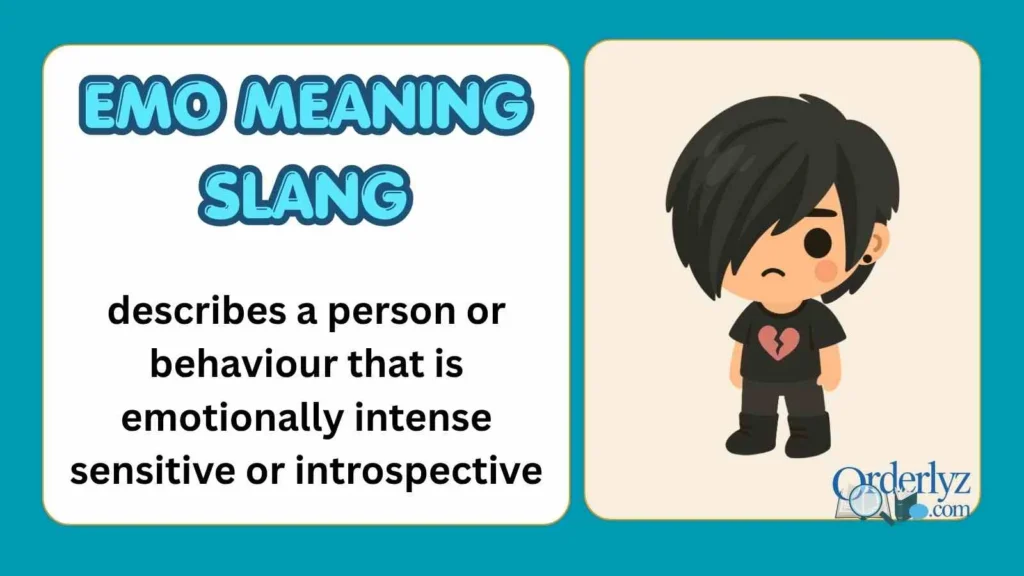
‘Emo’, meaning slang, describes a person or behaviour that is emotionally intense, sensitive, or introspective—sometimes seriously, sometimes jokingly.
Origin of Emo
The term “emo” originally came from the music genre “emotional hardcore” in the 1980s. Bands in this genre focused on raw, emotional lyrics. By the early 2000s, it evolved into a subculture associated with fashion, music, and emotional expression.
Evolution Over Time
- 2000s: Linked to music and a distinct style
- 2010s: Became a stereotype for emotional teens
- 2020s+: Used casually in texting and memes
Today, “emo” is less about identity and more about vibe.
Pronunciation
Simple and direct:
EE-moh
How to Use “Emo” Correctly in Texts & Chat
Using ’emo’ meaning slang correctly depends heavily on tone and context.
When It Works
- Casual chats with friends
- Joking about mood swings
- Describing emotional reactions
When to Avoid It
- Professional emails
- Talking to someone sensitive about emotions
- Serious mental health discussions
Platform-Specific Usage
- WhatsApp/SMS: “Why are you being emo today?”
- Instagram: “This song got me emo.” 😭
- TikTok: Used in captions about sad trends
- Discord/Reddit: Often used humorously
Formatting Tips
- Lowercase is most common: emo
- Often paired with emojis: 😭💔🥀
- Can be exaggerated for humor: “so emo rn”
Real Conversation Examples Using “Emo”
1. Between Friends
A: Bro, are you okay?
B: Yeah, just listening to sad songs
A: Stop being emo 😂
➡️ Meaning: Playful teasing about emotional mood
2. In a Group Chat
Friend 1: That movie destroyed me
Friend 2: Same 😭
Friend 3: Y’all are so emo
➡️ Meaning: Light-hearted observation about emotional reactions
3. Dating Scenario
Text: “I miss you already… “Wow, I sound emo lol.”
➡️ Meaning: Self-aware emotional expression
4. Family Chat
Sibling: Why are you so quiet?
You: Just tired
Sibling: Don’t go emo on us
➡️ Meaning: Slight exaggeration of mood
5. Gaming Chat
Player 1: We lost again…
Player 2: Don’t get emo; it’s just a game
➡️ Meaning: Encouraging someone not to overreact emotionally
Common Mistakes & Misunderstandings
1. Assuming It’s Always Negative
Not true. It can be playful or neutral depending on tone.
2. Generational Confusion
Older users may think “emo” refers strictly to the subculture, not slang.
3. Using It in Serious Conversations
Calling someone “emo” during emotional vulnerability can feel dismissive.
How to Clarify
If unsure, ask:
“Do you mean emotional or, like, joking emo?”
“Emo” Across Different Platforms & Demographics
Gen Z
Uses “emo” casually and humorously, often self-referentially.
Millennials
More likely to associate it with the early 2000s subculture.
Older Generations
May misunderstand it entirely or see it as outdated.
Platform Trends
- TikTok: “Emo vibes” trends are common
- Instagram: Used in captions about feelings
- Discord: Frequent in gaming humor
Formality
- Completely informal
- Not safe for professional use
Related Slang, Abbreviations & Alternatives
| Term | Meaning |
|---|---|
| Moody | Frequently changing emotions |
| Dramatic | Overly expressive emotionally |
| Sensitive | Easily affected emotionally |
| Soft | Emotionally open or gentle |
| I’m in my feels | Deep in emotions |
| Sadboi | Playfully emotional male |
| Crybaby | Someone who cries easily |
| Deep | Emotionally thoughtful |
| Melancholy | Quiet sadness |
| Vulnerable | Open about feelings |
FAQs:
What does emo mean in texting?
In texting, “emo” describes someone acting emotional or expressing strong feelings. It’s often used jokingly among friends but can also reflect genuine emotions.
Is calling someone emo rude?
It depends on tone. Among friends, it’s usually harmless. In serious situations, it may come off as dismissive or insensitive.
What is emo short for?
“Emo” comes from “emotional hardcore”, a music genre that later influenced slang usage.
Why do people say “I’m emo”?
People say it to express feeling emotional, sad, or introspective—sometimes seriously, sometimes humorously.
Is emo still a trend?
Yes. While the subculture has evolved, the slang remains popular in memes, social media, and everyday texting.
Conclusion:
Language online moves fast, and ’emo’, meaning slang, is a perfect example of how words evolve. What started as a music genre is now a casual way to describe emotions in digital conversations.
Used correctly, “emo” adds humour and relatability. Used poorly, it can create confusion or even offend. Context is everything.
Now that you know how it works, you’re ready to spot it, use it, and understand it like a pro.
Got a favourite slang term you use daily? Drop it in the comments and keep the convo going.

Hi, I’m Sophia Brownn, the creator behind Orderlyz.com, where words, meanings, and expressions are made simple, clear, and easy to understand.
I believe language shouldn’t feel confusing or overwhelming. In a world where new slang, trends, and expressions appear every day, my goal is to bring order to the chaos. I break down meanings in a way that feels natural, quick, and actually useful in real life conversations.