Ever opened an email and read, “Please be advised…” and instantly felt like things just got serious? You’re not alone. This phrase pops up in workplace emails, legal notices, and official messages—but what does it actually mean, and should you still use it today?
Understanding the ‘please be advised’ meaning is more important than ever in a world where communication styles are shifting toward clarity and simplicity. What once sounded professional can now feel stiff—or even intimidating—if used the wrong way.
In this updated 2025 guide, you’ll learn exactly what “please be advised” means, where it came from, when to use it (and when to avoid it), plus real-life examples that make it crystal clear. By the end, you’ll know how to sound confident—not robotic—in your messages.
What Does “Please Be Advised” Mean? (Definition + Origin)
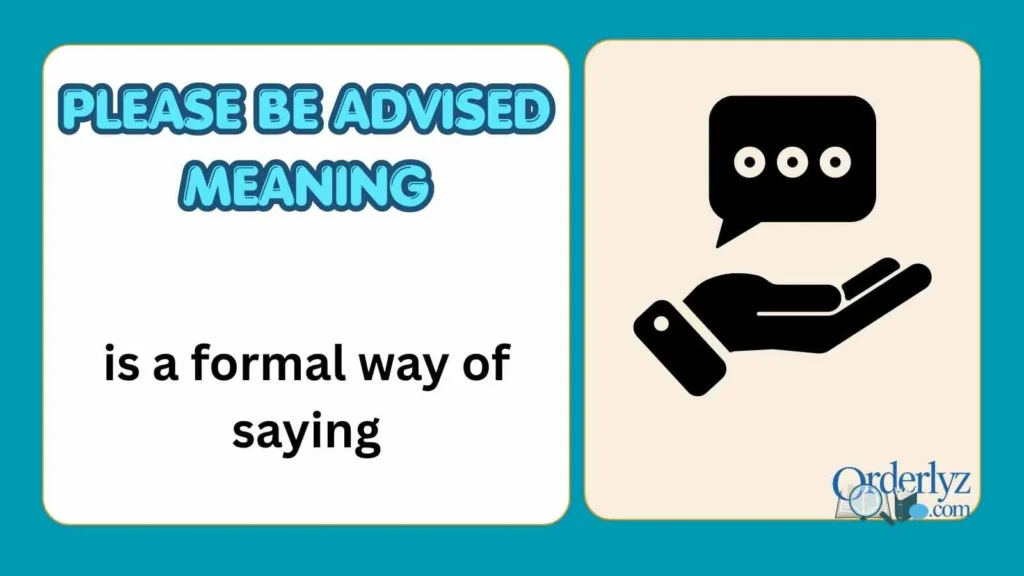
“Please be advised” means “please be informed” or “you should know”. It’s used to introduce important information, warnings, or updates—typically in formal communication.
Quick Answer:
“Please be advised” is a formal way of saying “take note of this important information.”
Origin & Evolution
The phrase comes from legal and bureaucratic language, where clarity and authority matter. It became popular in the following:
- Legal notices
- Government communication
- Corporate emails
Over time, it spread into everyday business emails—but modern communication trends are moving away from it because it can feel overly stiff.
Pronunciation
Please be advised.
Simple—but the tone carries weight.
How to Use “Please Be Advised” Correctly in Texts & Chat
Tone & Context
“Please be advised” is:
- Formal
- Neutral
- Slightly authoritative
It works best when:
- Sharing important updates
- Giving instructions
- Issuing warnings
Platform-Specific Usage
- Email (Work): Very common, especially in corporate environments
- WhatsApp: Rare, feels too formal
- Instagram DMs: Almost never used
- Slack/Discord: Sounds robotic or overly serious
- LinkedIn: Acceptable in formal posts or messages
When to Use It
Use it when:
- Announcing policy changes
- Sharing deadlines
- Delivering official notices
When NOT to Use It
Avoid it:
- In casual chats
- With friends or family
- In modern workplace messaging tools (unless necessary)
Better Formatting Tips
Instead of:
- “Please be advised that the meeting is cancelled.”
Try:
- “The meeting has been cancelled.”
- “Just a heads-up—the meeting is cancelled.”
Cleaner. More human.
Real Conversation Examples Using “Please Be Advised”
1. Workplace Email
Manager: Please be advised that the deadline has been moved to Friday.
Employee: Got it, thanks!
➡️ Tone: Formal and informative
2. Customer Support Message
Agent: Please be advised that your request is being processed.
Customer: Okay, I’ll wait.
➡️ Tone: Professional but slightly distant
3. Group Chat (Awkward Use)
Friend: Please be advised I’ll be late. 😂
Others: Bro… why so formal?
➡️ Tone: Humor through exaggeration
4. Legal Notice Style
Email: Please be advised that failure to comply may result in penalties.
➡️ Tone: Serious and authoritative
5. Gaming Chat (Sarcastic)
Player: Please be advised I’m about to carry this team. 😎
➡️ Tone: Playful sarcasm
Common Mistakes & Misunderstandings
1. Overusing It
Using it in every email makes you sound robotic. Mix it up.
2. Sounding Passive-Aggressive
Some people interpret it as:
- Cold
- Distant
- Slightly intimidating
3. Using It Casually
Dropping it in a casual chat feels unnatural and forced.
Generational Differences
- Gen Z: Avoids it, prefers casual clarity
- Millennials: Understand but use less often
- Older professionals: Still use it frequently
Cultural Differences
In some regions, formal language is still preferred—so context matters.
“Please Be Advised” Across Different Platforms & Demographics
Gen Z vs Millennials vs Professionals
- Gen Z: “FYI” or “Just so you know”
- Millennials: Balanced—formal when needed
- Corporate professionals: Still use it regularly
Platform Trends
- TikTok: Rare, except for humor
- Instagram: Almost nonexistent
- Email: Still widely used
- Corporate tools: Declining in favor of simpler language
Is It Safe for Work?
Yes—but not always ideal. Many workplaces now prefer the following:
- Clear
- Direct
- Friendly communication
Related Slang, Abbreviations & Alternatives
| Term | Meaning |
|---|---|
| FYI | For your information |
| Please note | Softer alternative |
| Just so you know | Casual version |
| Heads up | Informal warning |
| Kindly note | Polite but formal |
| Be aware | Slightly stronger tone |
| For your reference | Informational |
| Take note | Directive tone |
| Notice that | Instructional |
| Keep in mind | Friendly reminder |
These alternatives often sound more natural depending on the situation.
FAQs:
What does “please be advised” mean in emails?
It means you’re about to share important information the reader should pay attention to. It’s commonly used in formal or professional communication.
Is “please be advised” rude?
Not rude—but it can feel cold or overly formal. Tone and context matter a lot.
What can I say instead of “please be advised”?
You can use:
- “Please note”
- “Just letting you know”
- “FYI”
- “Heads up”
These often sound more natural.
Is “please be advised” outdated?
It’s not outdated, but it’s becoming less popular as communication shifts toward simplicity and clarity.
Should I use “please be advised” at work?
Yes—but only when appropriate. Use it for formal messages, not everyday communication.
Conclusion:
“Please be advised” still holds its place in formal communication, but it’s no longer the default choice. Today, clarity beats complexity.
If you understand the ‘please be advised’ meaning, you can decide when it adds professionalism—and when it just adds unnecessary stiffness.
Modern communication is shifting toward being the following:
- Clear
- Direct
- Human
So next time you’re about to type it, pause and ask: Is this the clearest way to say it?
Got a favourite phrase you use instead? Drop it below and keep the conversation going.

Hi, I’m Sophia Brownn, the creator behind Orderlyz.com, where words, meanings, and expressions are made simple, clear, and easy to understand.
I believe language shouldn’t feel confusing or overwhelming. In a world where new slang, trends, and expressions appear every day, my goal is to bring order to the chaos. I break down meanings in a way that feels natural, quick, and actually useful in real life conversations.