Ever tried not to check your phone during work… and failed? Or tried to ignore a piece of chocolate sitting on the table? That moment when you fight the urge that’s exactly what the word “resist” describes.
The resist meaning shows up everywhere in everyday language: texting friends, describing emotions, discussing politics, or even explaining science concepts. It’s a simple word, yet it carries powerful ideas about strength, self-control, and opposition.
Understanding the meaning of resist can improve your vocabulary, help you write more clearly, and make conversations sound more natural in English.
It’s also a word that appears often in school assignments, news articles, and social media discussions.
In this updated 2026 guide, you’ll learn:
- The clear definition and origin of “resist”
- How to use it correctly in conversation and writing
- Real dialogue examples
- Common mistakes people make
- Related words and slang alternatives
Let’s break it down.
Table of Contents
- What Does “Resist” Mean?
- How to Use “Resist” Correctly
- Real Conversation Examples
- Common Mistakes & Misunderstandings
- Usage Across Platforms & Demographics
- Related Words & Alternatives
- FAQs About Resist Meaning
- Conclusion
What Does “Resist” Mean? (Definition + Origin)
The resist meaning is straightforward but flexible depending on context.
Definition:
To resist means to oppose, withstand, or refuse to give in to something such as pressure, temptation, authority, or force.
It can apply to:
- Physical resistance – fighting force or pressure
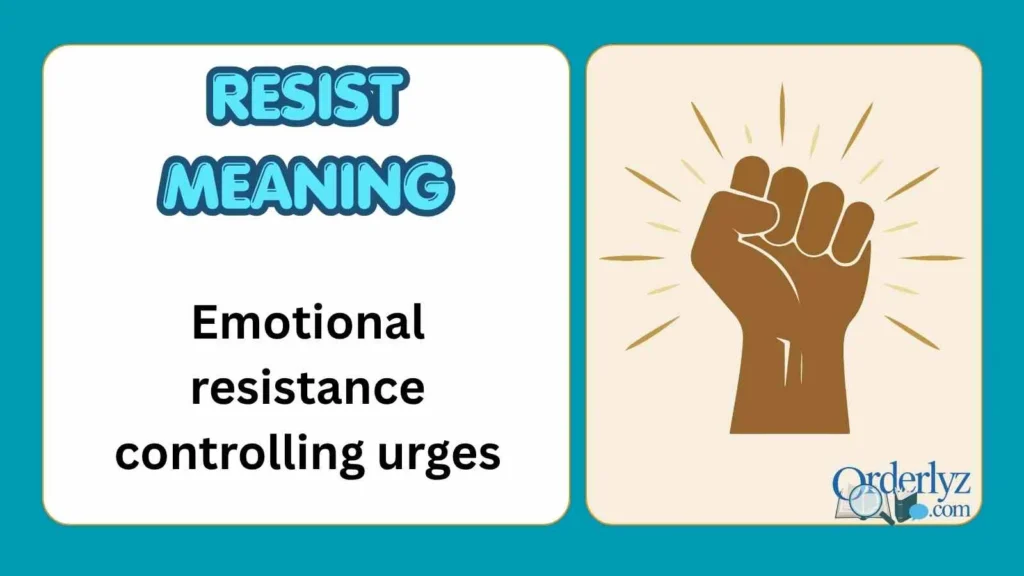
- Emotional resistance – controlling urges
- Social or political resistance – opposing authority
Quick Answer
Resist means to oppose, fight against, or refuse to accept something such as pressure, temptation, influence, or force.
Origin of the Word
The word comes from the Latin term “resistere,” which means to stand against.
Breakdown:
- re- = back or against
- sistere = to stand
So historically, resist literally means “to stand against something.”
The word entered English around the 14th century and has been used in political, religious, and personal contexts ever since.
Pronunciation Guide
Resist is pronounced:
ri-ZIST
Phonetic: /rɪˈzɪst/
The stress is on the second syllable.
How to Use “Resist” Correctly in Texts & Chat
Even though “resist” isn’t slang, it still appears frequently in casual conversations and online communication.
Common Contexts
People use resist when talking about:
- Temptation
- Pressure
- Authority
- Urges
- Physical force
Examples:
- Resist temptation
- Resist change
- Resist pressure
- Resist the urge
Casual Messaging (SMS, WhatsApp)
Examples:
- “I tried to resist checking my messages but I couldn’t.”
- “I can’t resist pizza.”
Tone: casual, expressive.
Social Media (Instagram, TikTok, X)
Often used humorously or dramatically.
Examples:
- “I tried to resist buying this… but I failed.”
- “POV: you can’t resist late-night snacks.”
Gaming / Discord
Players might say:
- “We couldn’t resist their attack.”
- “The enemy team resisted our push.”
Professional or Formal Settings
In professional writing, resist usually means oppose or withstand.
Example:
- “The company resisted the proposed policy change.”
When NOT to Use It
Avoid using resist when you simply mean decline.
Incorrect:
- “I resisted the invitation.”
Better:
- “I declined the invitation.”
Formatting Tips
You’ll often see phrases like:
- “Can’t resist” (very common)
- “Resist the urge”
- “Hard to resist”
Emoji pairings in casual chat:
- 🍕 (food temptation)
- 😂 (humorous failure)
- 😅 (guilty confession)
Example:
“Couldn’t resist this cake 😅”
Real Conversation Examples Using “Resist”
Here are realistic dialogue examples showing how people use resist naturally.
Example 1 — Between Friends
Alex: That chocolate cake looks amazing.
Maya: I know… I’m trying to resist.
Alex: Good luck with that.
Meaning: Maya is fighting the temptation to eat cake.
Example 2 — Dating Conversation
Chris: I tried to resist texting you all day.
Sam: Why would you resist that?
Chris: Didn’t want to seem too eager.
Meaning: Chris was holding back an urge.
Example 3 — Family Situation
Mom: Did you eat the cookies?
Teen: I tried to resist, but they smelled too good.
Meaning: The speaker couldn’t control temptation.
Example 4 — Work Chat
Manager: The team resisted the new policy at first.
Employee: Yeah, change is always difficult.
Meaning: The team opposed the policy.
Example 5 — Gaming Chat
Player1: We attacked their base.
Player2: Did they resist?
Player1: Yeah, their defense was strong.
Meaning: The opponent fought back.
Common Mistakes & Misunderstandings
Even though the word seems simple, people often misuse it.
1. Confusing “Resist” with “Refuse”
Incorrect:
“She resisted the offer.”
Correct:
“She refused the offer.”
Resist = fighting against pressure
Refuse = saying no
2. Using It Without an Object
Incorrect:
“I resist.”
Correct:
“I resist temptation.”
The verb usually needs something to resist.
3. Generational Misinterpretation
Older generations sometimes interpret “can’t resist” literally.
Example:
Teen: “I can’t resist memes.”
Parent: “Why not?”
The teen simply means they love memes too much to ignore them.
4. Cultural Context
In political discussions, resist may have stronger meaning.
Example:
“People resisted the government.”
This implies organized opposition.
“Resist” Across Different Platforms & Demographics
Different groups use the word differently.
Gen Z Usage
Often humorous or dramatic.
Examples:
- “I can’t resist cute dog videos.”
- “Tried to resist buying this hoodie.”
Popular in:
- TikTok captions
- Instagram reels
- memes
Millennials
Common in storytelling or humor.
Example:
“I tried to resist ordering food again… failed.”
Older Generations
More formal use:
- Political resistance
- Social resistance
- moral resistance
Platform Trends
TikTok:
Used in humorous captions.
Example:
“Trying to resist buying another plant.”
Instagram:
Often used in lifestyle captions.
Discord / Gaming:
Used strategically in gameplay.
Related Slang, Abbreviations & Alternatives
Here are related words and expressions similar to resist.
| Word / Phrase | Meaning |
|---|---|
| Oppose | Actively fight against something |
| Withstand | Survive pressure or force |
| Defy | Openly resist authority |
| Reject | Refuse to accept |
| Fight off | Push away temptation |
| Hold back | Stop yourself from doing something |
| Give in | Stop resisting |
| Stand against | Support opposition |
| Refuse | Decline something directly |
Opposite phrase:
Give in to temptation
Example:
“I tried to resist, but I gave in.”
FAQs:
What does resist mean in simple terms?
Resist means refusing to give in to something. It usually involves actively fighting or opposing pressure, temptation, or force.
How do you use resist in a sentence?
Example sentence:
“She tried to resist laughing during the meeting.”
It shows someone controlling or opposing an urge.
What is a synonym for resist?
Common synonyms include oppose, defy, withstand, reject, and fight against.
Each synonym has slightly different nuance depending on the situation.
Is resist positive or negative?
It depends on context.
Positive examples:
- resisting temptation
- resisting peer pressure
Negative examples:
- resisting helpful advice
- resisting necessary change
What does “can’t resist” mean?
“Can’t resist” means something is too tempting or appealing to ignore.
Example:
“I can’t resist pizza.”
It implies the speaker loves it too much to say no.
Conclusion
The meaning of ‘resist’ centres around one powerful idea: standing against something—whether it’s temptation, pressure, authority, or force.
It’s a word you’ll hear in everyday life, from casual conversations about food cravings to serious discussions about politics and social change.
Understanding how to use resist correctly helps you:
- communicate more clearly
- sound more natural in English
- avoid common vocabulary mistakes
And once you start noticing it, you’ll see it everywhere from group chats to news headlines.
Next time you’re fighting the urge to check your phone, buy something online, or eat another cookie… Remember:
You’re trying to resist.
Drop your favourite English expression or slang word in the comments below and explore more language guides to level up your vocabulary.

Hi, I’m Sophia Brownn, the creator behind Orderlyz.com, where words, meanings, and expressions are made simple, clear, and easy to understand.
I believe language shouldn’t feel confusing or overwhelming. In a world where new slang, trends, and expressions appear every day, my goal is to bring order to the chaos. I break down meanings in a way that feels natural, quick, and actually useful in real life conversations.