Ever wondered how big companies always seem to have the right products available at the right time? It’s not luck—it’s planning. That’s where S&OP meaning comes into play.
In today’s fast-moving business world, understanding S&OP isn’t just for executives or supply chain experts. Whether you’re a student, entrepreneur, or professional, knowing how businesses balance demand and supply gives you a serious edge.
S&OP (Sales and Operations Planning) is the backbone of smart decision-making in modern organisations. It connects sales forecasts with production, inventory, and logistics—keeping everything in sync.
In this updated for 2026 guide, you’ll learn what S&OP really means, how it works in real life, where people use it, and why it’s more relevant than ever.
What Does “S&OP Meaning” Mean? (Definition + Origin)
‘S&OP’ meaning stands for ‘sales and operations planning’. It’s a structured business process that helps companies align customer demand with supply capabilities.
Quick Answer:
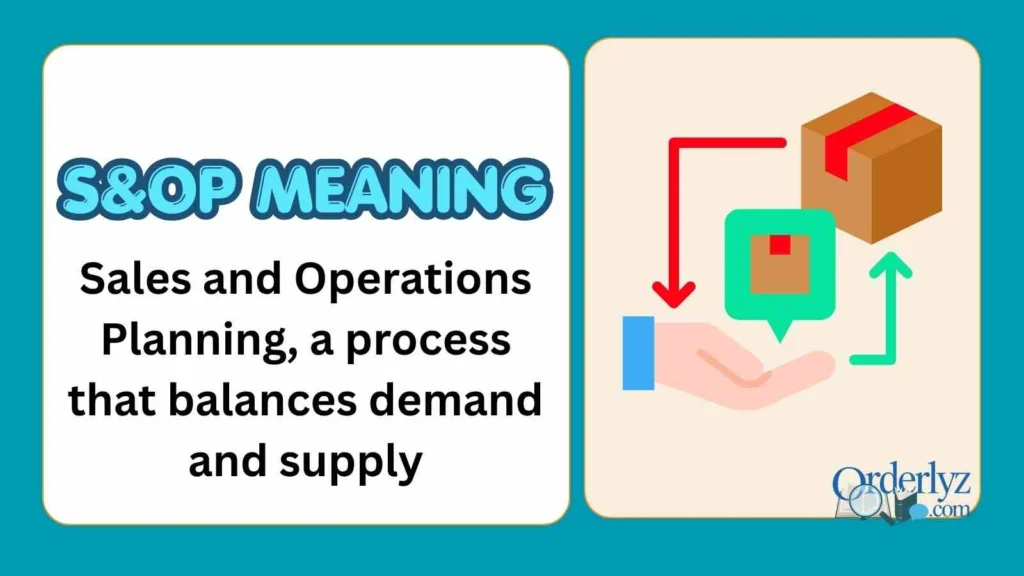
S&OP meaning: Sales and Operations Planning, a process that balances demand and supply to improve business efficiency and decision-making.
Origin & Evolution
S&OP first emerged in the 1980s as companies struggled to manage growing supply chains. Initially, it focused only on inventory and production planning.
Over time, it evolved into a strategic process involving multiple departments—sales, marketing, finance, and operations. Today, it’s a critical tool for companies aiming to stay competitive.
Pronunciation
S&OP is usually spoken as
“S and O P” (letter by letter)
How to Use “S&OP” Correctly in Business Contexts
Unlike slang, S&OP is used in professional and corporate environments. You’ll commonly hear it in meetings, reports, and strategy discussions.
Common Usage Contexts
- Business meetings
- Supply chain discussions
- Corporate emails
- Financial planning sessions
Example Usage
- “We need to improve our S&OP process this quarter.”
- “The S&OP meeting highlighted demand gaps.”
Where NOT to Use It
Avoid using S&OP in:
- Casual chats with friends
- Non-business conversations
- Informal social media posts
Formatting Tips
- Always capitalize: S&OP
- Avoid writing as “sop” (this can mean something else: Standard Operating Procedure)
- Use it after first defining it in formal writing
Real Conversation Examples Using “S&OP”
1. In a Business Meeting
Manager: “Our S&OP cycle isn’t aligned with sales forecasts.”
Analyst: “We should update demand planning inputs.”
👉 Meaning: Highlights coordination issues between teams.
2. Between Supply Chain Teams
Planner: “Did the S&OP review approve increased production?”
Supervisor: “Yes, starting next month.”
👉 Meaning: Refers to the decision-making process.
3. In an Email
“Please review the S&OP report before tomorrow’s meeting.”
👉 Meaning: A formal request involving planning data.
4. Executive Discussion
“Our S&OP strategy must support long-term growth.”
👉 Meaning: Strategic-level planning.
5. Startup Environment
“We don’t have a formal S&OP yet, but we track demand weekly.”
👉 Meaning: Informal or developing process.
Common Mistakes & Misunderstandings
1. Confusing S&OP with SOP
Many people mix it up with standard operating procedures (SOPs).
👉 These are completely different concepts.
2. Thinking It’s Only About Sales
S&OP involves:
- Sales
- Operations
- Finance
- Supply chain
Not just sales data.
3. Assuming It’s Only for Big Companies
Even small businesses can benefit from S&OP principles.
Generational Gap
- Younger professionals may learn it academically
- Older professionals may use it practically without formal naming
“S&OP” Across Different Industries & Demographics
Who Uses S&OP?
- Supply chain professionals
- Operations managers
- Business analysts
- Executives
Industry Usage
- Manufacturing: Most common
- Retail: Demand forecasting
- E-commerce: Inventory management
- Healthcare: Resource planning
Is It Formal?
Yes—S&OP is strictly professional terminology.
Trending Relevance
With global supply chain disruptions and AI forecasting tools, S&OP has become more important than ever.
Related Terms, Abbreviations & Alternatives
Here are terms closely related to S&OP:
- Demand Planning – Forecasting customer demand
- Supply Planning – Managing production and inventory
- IBP (Integrated Business Planning) – Advanced version of S&OP
- Forecasting – Predicting future demand
- Inventory Management – Controlling stock levels
- ERP Systems – Software supporting S&OP
- Capacity Planning – Managing production limits
- Logistics Planning – Coordinating transportation
- Sales Forecasting – Predicting sales numbers
FAQs:
What does S&OP stand for?
S&OP stands for Sales and Operations Planning. It’s a process used by businesses to align sales forecasts with production and supply chain operations for better efficiency.
What is the main goal of S&OP?
The goal is to balance supply and demand while maximising profitability, improving service levels, and reducing waste.
How often is S&OP done?
Most companies run S&OP on a monthly cycle, though some fast-moving industries may do it weekly.
Is S&OP part of supply chain management?
Yes, S&OP is a key component of supply chain management, connecting different departments to ensure smooth operations.
What tools are used in S&OP?
Companies use tools like ERP systems, forecasting software, and data analytics platforms to manage S&OP effectively.
Conclusion:
Understanding S&OP meaning gives you insight into how modern businesses actually function behind the scenes. It’s not just a buzzword—it’s a system that keeps everything running smoothly.
From balancing demand and supply to improving decision-making, S&OP plays a huge role in business success. And as industries become more data-driven, its importance will only grow.
If you’re stepping into business, operations, or supply chain roles, mastering S&OP is a smart move.
Want to explore more business terms? Drop your favourite abbreviation below and keep learning!

Hi, I’m Sophia Brownn, the creator behind Orderlyz.com, where words, meanings, and expressions are made simple, clear, and easy to understand.
I believe language shouldn’t feel confusing or overwhelming. In a world where new slang, trends, and expressions appear every day, my goal is to bring order to the chaos. I break down meanings in a way that feels natural, quick, and actually useful in real life conversations.