You’ve probably heard phrases like the following:
- “This medicine will relieve pain.”
- “I felt relieved after the exam.”
- “That message relieved my anxiety.”
- “Can someone relieve me from this shift?”
Same word family. Different situations. Very human energy.
Understanding the meaning of ‘relieve’ matters because it’s one of those everyday English words people use constantly — in conversations, hospitals, workplaces, relationships, and even texting.
The tricky part? “Relieve” can describe:
- Physical pain
- Emotional stress
- Responsibility
- Pressure
- Anxiety
- Temporary replacement at work
English really said, “One word. Many jobs.”
In this guide, you’ll learn:
- The exact meaning of relieve
- How native speakers use it naturally
- Common emotional and medical uses
- Texting and chat examples
- Mistakes learners often make
- Synonyms, alternatives, and related phrases
Updated for 2026, this is the beginner-friendly, real-world explanation of “relieve” that dictionaries usually forget to make understandable.
What Does “Relieve” Mean? (Definition + Origin)
‘Relieve’ means to reduce, ease, or remove pain, stress, discomfort, pressure, or responsibility.
The word often describes making a difficult feeling or situation better.
Quick Answer
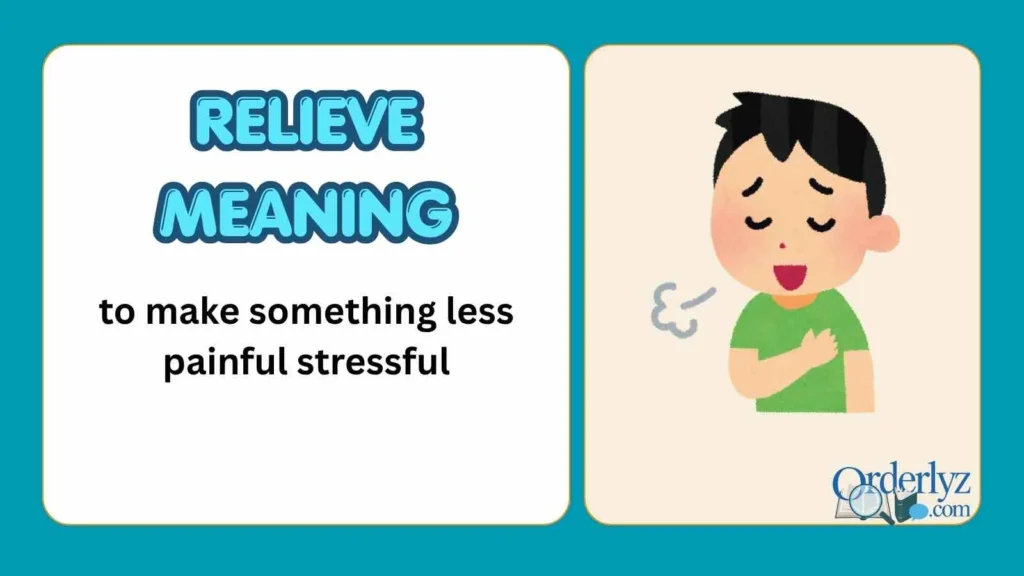
“Relieve” means to make something less painful, stressful, serious, or difficult. People commonly use it for pain relief, emotional comfort, reducing stress, or replacing someone in a responsibility or duty.
Origin of the Word “Relieve”
The word comes from Old French and Latin roots meaning the following:
- to lift up
- lighten
- raise a burden
That original idea still exists today.
When you “relieve” something, you’re essentially the following:
making a burden lighter
It’s a pretty wholesome word when you think about it.
Pronunciation Guide
“Relieve” is pronounced:
ri-LEEV
Rhymes with:
- Believe
- Receive
- Achieve
How the Meaning Has Evolved
Originally, “relieve” often referred to the following:
- Helping people in distress
- Military replacement duties
- Reducing hardship
Modern English expanded it into the following:
- Medical language
- Emotional wellness
- Workplace communication
- Everyday stress discussions
Now people believe:
- Headaches
- Anxiety
- Boredom
- Pressure
- Responsibilities
- Even awkward silence sometimes
How to Use “Relieve” Correctly in Texts & Conversation
The word “relieve” usually carries a
- Helpful
- Comforting
- Supportive
- Calming tone
People use it when something improves emotionally or physically.
Common Everyday Uses
Physical Pain
“The medicine relieved my headache.”
Meaning:
The pain became less severe.
Emotional Stress
“Talking to her relieved my anxiety.”
Meaning:
The conversation reduced emotional stress.
Responsibility or Duty
“Can you relieve me for a few minutes?”
Meaning:
Can you temporarily take over my responsibility?
Pressure or Tension
“The good news relieved everyone.”
Meaning:
People felt calmer afterward.
Platform-Specific Usage
Texting & WhatsApp
People often use ‘relieve’ casually in emotional conversations:
- “That honestly relieved me.”
- “I’m relieved now.”
- “Thanks, you relieved my stress.”
Usually sincere and emotional.
Instagram Captions
Common emotional captions include:
- “Music relieves my soul.”
- “Travel relieves stress.”
- “Gym sessions relieve anxiety.”
Very wellness-core.
Twitter/X
Often used in discussions about:
- Mental health
- Work burnout
- Current events
- Stress relief
People commonly discuss:
- Stress relief
- Emotional coping
- Pain relief methods
- Anxiety reduction
When NOT to Use “Relieve”
Avoid using “relieve”. when:
- The issue becomes worse
- No actual improvement happened
Example:
Incorrect:
“The bad news relieved everyone.”
Unless your office is incredibly strange, that sentence probably doesn’t work.
Formatting & Tone Tips
“Relieve” sounds:
- Polite
- Neutral
- Compassionate
It works on:
- Formal writing
- Casual conversation
- Professional settings
- Medical contexts
Unlike slang-heavy words, this one is universally acceptable.
Real Conversation Examples Using “Relieve”
Here’s how native speakers naturally use “relieve”.
Between Friends
Friend 1: “Did the doctor call back?”
Friend 2: “Yeah, everything’s fine. Huge relief, honestly.”
Meaning:
Stress and anxiety decreased.
Family Conversation
Mom: “Did the medicine help?”
Son: “Yeah, it relieved the pain a little.”
Meaning:
Physical discomfort became less intense.
Workplace Example
Coworker: “Can you relieve me at the front desk for 10 minutes?”
You: “Sure.”
Meaning:
You temporarily replace someone at work.
Emotional Support Example
Person 1: “I thought everyone was mad at me.”
Person 2: “No way. Hope that relieves some stress.”
Meaning:
Trying to comfort someone emotionally.
Student Life Example
Student: “Finishing that final exam relieved so much pressure.”
Meaning:
The stressful situation ended or became easier.
Honestly, post-exam relief deserves its own national holiday.
Common Mistakes & Misunderstandings
Even advanced English learners misuse “relieve” sometimes.
Here are the biggest mistakes.
1. Confusing “Relieve” With “Release”
These words are related but different.
Relieve
Means:
- Reduce discomfort
- Ease pressure
Release
Means:
- Let go
- Free something
- Make available
Example:
- “The medicine relieved pain.”
- “The company released a new phone.”
Different meanings entirely.
2. Using Relieve for Positive Excitement
“Relieve” is usually connected to:
- Stress
- Pain
- Burden
- Pressure
Not excitement.
Incorrect:
“The concert filled me with happiness.”
Natural English would usually say the following:
“The concert made me happy.”
3. Forgetting the Emotional Tone
“Relieve” often implies the following:
prior discomfort
Without stress, pain, or burden beforehand, the word may sound unnatural.
Generational Differences in Usage
Younger Speakers
Often connect “relieve” to the following:
- Mental health
- Anxiety
- Burnout
- Emotional wellness
Older Generations
May use it more traditionally:
- Physical pain
- Work shifts
- Duty replacement
Cultural Differences
In many cultures, discussing stress openly became more common only recently.
That’s why phrases like
- “stress relief”
- “anxiety relief”
- “emotional relief”
appear much more online today than they did years ago.
“Relieve” Across Different Contexts & Demographics
Medical Usage
Doctors and pharmacists constantly use “relieve” for the following:
- Pain relief
- Allergy relief
- Symptom reduction
Examples:
- “This tablet relieves headaches.”
- “The cream relieves itching.”
Mental Health Discussions
Social media increased usage around the following:
- Stress relief
- Emotional healing
- Anxiety reduction
People now openly discuss what relieves them emotionally:
- Music
- Therapy
- Exercise
- Sleep
- Nature
- Turning notifications off for five minutes
Workplace Usage
Managers and employees often use:
- “Relieve someone from duty”
- “Relieve workload”
- “Relieve pressure”
Very common in:
- Healthcare
- Retail
- Security
- Hospitality jobs
Is “Relieve” Formal or Informal?
It’s flexible.
“Relieve” works in:
- Academic writing
- Casual speech
- Professional communication
- Emotional conversations
One of English’s most adaptable verbs, honestly.
Related Words, Synonyms & Alternatives
| Word | Meaning |
|---|---|
| Ease | Make less painful |
| Reduce | Make smaller or weaker |
| Comfort | Provide emotional support |
| Calm | Reduce stress or panic |
| Soothe | Gently reduce pain or stress |
| Alleviate | Formal version of relieve |
| Relax | Become less tense |
| Release | Let go or free |
| Support | Help emotionally or physically |
| Reassure | Remove fear or doubt |
Opposites of ‘relieve’
Common antonyms include:
- Worsen
- Increase
- Intensify
- Aggravate
- Stress
Related Phrases
You may also hear:
- “Stress relief”
- “Pain relief”
- “Relief valve”
- “Relief effort”
- “Relief from anxiety”
The noun form:
relief
is extremely common in English.
Helpful External Resource
The Cambridge Dictionary provides additional examples and grammatical explanations for “relieve” and related forms.
FAQs:
What does ‘relieve’ mean?
‘Relieve’ means to reduce pain, stress, pressure, discomfort, or responsibility so that a situation feels easier or better.
What is a simple example of relief?
Example:
“The medicine relieved my headache.”
This means the medicine reduced the pain.
Does ‘relieve’ mean ‘completely remove’?
Not always. “Relieve” often means lessen or improve rather than fully eliminate something.
What is the difference between ‘relieve’ and ‘alleviate’?
They are very similar. “Alleviate” sounds more formal and academic, while “relieve” is more common in everyday conversation.
Can relieve be emotional?
Yes. People often use ‘relieve’ for emotional stress, anxiety, fear, pressure, or worry.
Yes, “I’m relieved” is correct English.
Absolutely. “I’m relieved” means you feel calmer or less worried after stress or uncertainty ends.
Conclusion:
Understanding the meaning of ‘relieve’ is less about memorising a dictionary definition and more about recognising how people use the word emotionally and practically every day.
At its core, “relieve” means the following:
- making pain smaller
- reducing stress
- easing burdens
- helping someone feel better
Simple idea. Huge range of uses.
Whether someone says:
- “This relieves pain.”
or - “I’m relieved it worked out.”
The word almost always points toward comfort, improvement, or emotional release.
And honestly? English could use more words with that energy.

Hi, I’m Sophia Brownn, the creator behind Orderlyz.com, where words, meanings, and expressions are made simple, clear, and easy to understand.
I believe language shouldn’t feel confusing or overwhelming. In a world where new slang, trends, and expressions appear every day, my goal is to bring order to the chaos. I break down meanings in a way that feels natural, quick, and actually useful in real life conversations.