Ever heard someone say, “You should probably start an LLC,” and nodded along while secretly wondering what that even means?
You’re not alone.
The phrase “LLC meaning for dummies” gets searched thousands of times because new entrepreneurs, freelancers, creators, and side hustlers all hit the same moment: “Wait… do I actually need an LLC?”
The business world loves complicated jargon. LLCs sound intimidating at first, but the concept is surprisingly simple once someone explains it in plain English. No law degree required.
This beginner-friendly guide breaks down what an LLC is, why people use one, how it works, and whether it makes sense for your business. You’ll also see real-life examples, common mistakes, tax basics, and easy comparisons with other business types.
Updated for 2026, this guide is designed for real humans — not accountants trying to impress each other on LinkedIn.
What Does “LLC” Mean? (Definition + Origin)
An LLC stands for Limited Liability Company.
It’s a legal business structure that separates your personal finances from your business finances. In simple terms, if the business gets sued or owes money, your personal assets are usually protected.
Think of it like a legal shield between “you the person” and “you the business owner”.
Quick Answer:
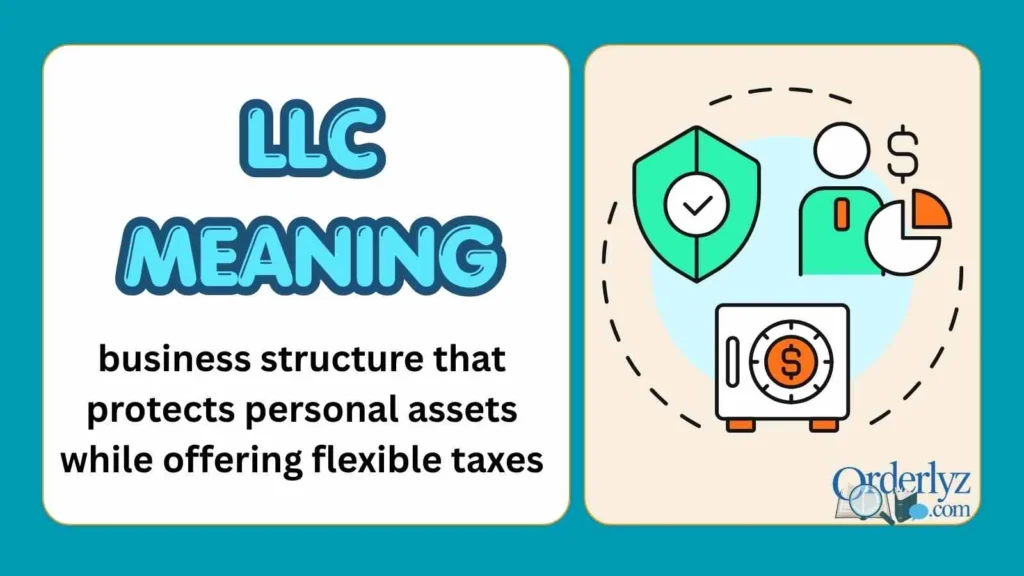
An LLC is a business structure that protects personal assets while offering flexible taxes and easier management than corporations.
The Simple Version
Imagine you start an online candle shop.
Without an LLC:
- If the business gets sued, your personal savings could be at risk.
With an LLC:
- The business is treated separately from you personally.
That’s the “limited liability” part.
Where Did LLCs Come From?
The LLC structure became popular in the United States during the late 1970s and exploded in the 1990s as small businesses and internet startups grew.
Today, LLCs are one of the most common business structures for the following:
- Freelancers
- E-commerce stores
- YouTubers
- Consultants
- Real estate investors
- Small agencies
- Local businesses
Pronunciation Guide
Most people simply say:
- “L-L-C” (spelling each letter)
Rarely, someone may jokingly say “lick”, but don’t do that in a business meeting unless you enjoy awkward silence.
Why People Create an LLC
Here’s the big reason:
Protection
An LLC helps protect your:
- Personal bank account
- Car
- Home
- Savings
from business debts or lawsuits.
That alone makes many entrepreneurs interested.
Flexibility
LLCs are also flexible with:
- Taxes
- Ownership
- Management
- Profit distribution
You don’t need a giant corporate board or complicated shareholder meetings.
Credibility
Let’s be honest:
“Jake’s Lawn Service LLC” sounds more professional than
“Jake is mowing grass out of his garage.”
Adding “LLC” can make clients take your business more seriously.
How to Use “LLC” Correctly in Business & Conversation
Unlike internet slang, ‘LLC’ is a formal business term. But people still misuse it constantly.
Correct Usage
You usually place LLC after the business name:
- BrightPixel Media LLC
- Luna Coffee LLC
- Smith Consulting LLC
Common Places You’ll See It
- Contracts
- Invoices
- Websites
- Business bank accounts
- Tax forms
- Email signatures
When NOT to Use It
Don’t randomly add LLC if your business isn’t legally registered.
That’s a legal issue in many places.
Bad example:
- “Mike’s Photography LLC” (without actually forming one)
Formatting Tips
- Usually capitalized: LLC
- No periods needed: LLC is more common than L.L.C.
- Appears at the end of a business name
Professional Tone
Unlike slang abbreviations, LLC is always considered professional and business-appropriate.
You can safely use it in:
- Emails
- Contracts
- Government paperwork
- Investor pitches
How an LLC Actually Works (Without the Legal Headache)
Here’s the easiest explanation.
An LLC creates a separate legal identity for your business.
That means:
- The business can own assets
- The business can open bank accounts
- The business can sign contracts
- The business can owe money separately from you
Real-Life Analogy
Picture your business wearing a protective bubble.
If something bad happens inside the bubble, your personal life outside the bubble is usually safer.
Not always perfectly protected — especially if fraud or negligence happens — but much safer than operating without one.
Single-Member vs Multi-Member LLC
Single-Member LLC
One owner.
Common for:
- Freelancers
- Solo creators
- Etsy sellers
- Consultants
Multi-Member LLC
Multiple owners.
Common for:
- Partnerships
- Agencies
- Family businesses
- Startups
Real Conversation Examples Using LLC
Example 1 — Between Friends
Alex: “I started making decent money from my TikTok shop.”
Jordan: “You should probably create an LLC now.”
Alex: “Yeah, I don’t want personal liability issues.”
What it conveys:
The LLC is being discussed as financial protection for a growing business.
Example 2 — Freelancer Scenario
Client: “Can you invoice us through your company?”
Designer: “Yep, it’s under PixelCraft LLC.”
What it conveys:
The LLC adds professionalism and legitimacy.
Example 3 — Family Discussion
Mom: “Why are you setting up an LLC?”
Son: “So my personal savings are safer if the business gets sued.”
What it conveys:
A simple explanation of liability protection.
Example 4 — Startup Team Chat
Founder 1: “Should we form a corporation?”
Founder 2: “Maybe start with an LLC first since it’s simpler.”
What it conveys:
LLCs are often viewed as easier for small startups.
Example 5 — Online Seller
Seller: “I finally registered my Amazon store as an LLC.”
Friend: “Nice. That makes things way more official.”
What it conveys:
The LLC signals growth and seriousness.
LLC Taxes Explained for Beginners
This is the part that scares everyone unnecessarily.
Relax. Here’s the simplified version.
Default LLC Taxes
Most LLCs are “pass-through entities”.
That means:
- The business itself usually doesn’t pay income tax.
- Profits pass through to the owner’s personal tax return.
Simple Example
If your LLC earns:
- $50,000 profit
You generally report that on your personal taxes.
Why People Like This
It avoids “double taxation”, which corporations sometimes face.
Can an LLC Choose Different Taxes?
Yes.
An LLC can sometimes choose to be taxed as one of the following:
- S Corporation
- C Corporation
That’s where accountants start speaking in mysterious ancient scroll language.
For beginners, standard LLC taxation is usually enough to understand initially.
LLC vs Sole Proprietorship
This comparison confuses almost everyone at first.
| Feature | LLC | Sole Proprietorship |
|---|---|---|
| Personal Liability Protection | Yes | No |
| Easy to Start | Moderate | Very Easy |
| Professional Credibility | Higher | Lower |
| Separate Business Entity | Yes | No |
| Tax Flexibility | High | Low |
| Legal Paperwork | More | Minimal |
The Biggest Difference
A sole proprietorship means you and the business are legally the same.
An LLC = the business becomes legally separate.
That separation is the whole game.
LLC Pros and Cons
Pros of an LLC
Personal Asset Protection
Probably the #1 reason people form one.
Flexible Taxes
You get multiple taxation options.
Easier Than Corporations
Less paperwork and fewer formal requirements.
More Professional Image
Clients and partners often trust registered businesses more.
Cons of an LLC
Filing Fees
Most states charge setup and renewal fees.
Paperwork
Still simpler than corporations, but not zero paperwork.
Not Perfect Protection
Fraud, personal guarantees, or illegal behaviour can still create liability.
Common Mistakes & Misunderstandings
Mistake #1 — Thinking an LLC Eliminates All Risk
Nope.
An LLC helps protect you, but it’s not a magical invisibility cloak.
Mistake #2 — Mixing Personal and Business Money
Huge beginner mistake.
If you use one bank account for everything, courts may ignore your LLC protection.
Get a separate business account.
Immediately.
Mistake #3 — Assuming You Don’t Need Insurance
LLCs help legally. Insurance helps financially.
Smart businesses often use both.
“LLC” Across Different Industries & Demographics
Gen Z Entrepreneurs
Gen Z creators are forming LLCs earlier than previous generations.
Why?
- TikTok shops
- YouTube income
- Freelance gigs
- Dropshipping
- Digital products
A teenager selling templates online can suddenly become a real business owner surprisingly fast.
Millennials
Millennials often use LLCs for the following:
- Side hustles
- Real estate investing
- Agencies
- Consulting
Older Generations
Older entrepreneurs sometimes prefer corporations because that structure dominated for decades.
But LLCs are now mainstream across nearly every age group.
Is an LLC Safe for Online Businesses?
Usually, yes.
Many online businesses use LLCs, including:
- Shopify stores
- Blogging businesses
- Coaching brands
- YouTube channels
- Etsy shops
- Amazon sellers
Common Online Uses
An LLC can help with:
- Payment processor setup
- Business banking
- Brand credibility
- Tax organization
- Legal separation
Related Business Terms & Alternatives
| Term | Meaning |
|---|---|
| Sole Proprietorship | Simplest business structure with no liability protection |
| Corporation | More formal business entity with shareholders |
| S Corporation | Tax election that may reduce self-employment taxes |
| EIN | Employer Identification Number for taxes |
| DBA | “Doing Business As” business nickname |
| Partnership | Business owned by multiple people |
| Registered Agent | Person or company receiving legal documents |
| Operating Agreement | Internal LLC rules document |
| Business Licence | Government permission to operate |
| Liability Insurance | Insurance covering business risks |
Related Articles to Explore
- “LLC vs S Corp Explained”
- “What Is a DBA?”
- “How to Start an Online Business Legally”
- “Best Business Structures for Freelancers”
- “EIN Meaning Explained Simply”
FAQs:
Is an LLC a real company?
Yes. An LLC is a legally recognised business entity created under state law.
Do I need an LLC to start a business?
No. Many people start as sole proprietors first. But an LLC can provide stronger protection and credibility as the business grows.
Can one person own an LLC?
Absolutely. Single-member LLCs are extremely common among freelancers and solo business owners.
Does an LLC save taxes?
Sometimes. LLCs offer flexible tax options, but savings depend on income, location, and business type.
How much does an LLC cost?
It varies by state or country. Filing fees can range from around $50 to several hundred dollars.
Do YouTubers and influencers use LLCs?
Very often, yes. Many creators form LLCs to separate personal and business finances.
Is an LLC better than a corporation?
It depends on the business. LLCs are usually simpler, while corporations may work better for large companies seeking investors.
Conclusion:
The simplest way to understand LLC meaning for dummies is this:
An LLC helps separate your personal life from your business life.
That protection is why millions of entrepreneurs use LLCs for everything from coffee shops to YouTube channels.
It’s not magic; It’s not complicated corporate wizardry either.
It’s just one of the smartest beginner-friendly ways to structure a business.
If you’re starting a side hustle, freelance career, online store, or local business, understanding LLCs is one of the best first steps you can take.
Got a business idea brewing already?
Drop your favourite side hustle idea in the comments – or explore more beginner business guides next.

Hi, I’m Sophia Brownn, the creator behind Orderlyz.com, where words, meanings, and expressions are made simple, clear, and easy to understand.
I believe language shouldn’t feel confusing or overwhelming. In a world where new slang, trends, and expressions appear every day, my goal is to bring order to the chaos. I break down meanings in a way that feels natural, quick, and actually useful in real life conversations.