Ever heard someone say, “I’m so OCPD about my desk,” and wondered whether they meant a real mental health condition or just being extra organised?
You’re not alone. The phrase “OCPD meaning” has exploded in search popularity as more people encounter the term on TikTok, Reddit, therapy podcasts, memes, and casual group chats. The problem? Many people confuse OCPD with OCD — and the difference actually matters.
Online slang has a weird habit of turning serious psychology terms into casual internet shorthand. Sometimes it’s harmless. Sometimes it spreads misinformation faster than a viral tweet.
This guide breaks down what OCPD really means, how people use it online, how it differs from OCD, real texting examples, common misunderstandings, and why the term has become part of modern internet culture.
Updated for 2025 with current mental health terminology and digital communication trends.
## What Does “OCPD” Mean? (Definition + Origin)
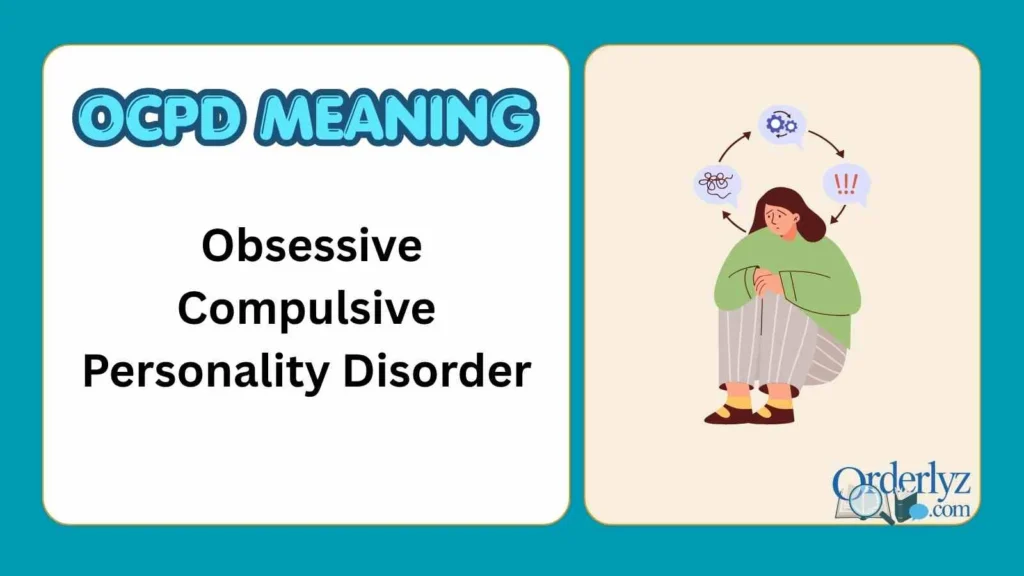
OCPD stands for Obsessive-Compulsive Personality Disorder.
It’s a recognised mental health condition characterised by:
- perfectionism
- rigid routines
- strong need for control
- rule-following
- difficulty delegating tasks
- intense focus on order and productivity
Unlike casual internet slang, OCPD is an actual clinical diagnosis used in psychology and psychiatry.
> Quick Answer:
‘OCPD’ meaning refers to Obsessive-Compulsive Personality Disorder, a condition involving perfectionism, control, and rigid behaviour patterns that can interfere with relationships and daily life.
Where Did the Term ‘OCPD’ Come From?
The abbreviation comes from clinical psychology and appears in diagnostic manuals like the DSM (Diagnostic and Statistical Manual of Mental Disorders).
The term became more widely recognised online during:
- mental health awareness movements
- TikTok psychology discussions
- Reddit self-diagnosis communities
- therapy-related YouTube content
Over time, people started using “OCPD” casually in texts and memes to describe overly organised or perfectionist behaviour – even when no diagnosis exists.
That’s where confusion started.
Pronunciation Guide
People usually say the letters individually:
“Oh-See-Pee-Dee”
Not exactly the smoothest acronym on earth, but internet culture loves abbreviations anyway.
## OCPD vs OCD: The Difference Most People Get Wrong
This is the biggest misconception online.
People constantly mix up OCD and OCPD, but they are not the same condition.
| OCPD | OCD |
|---|---|
| Personality disorder | Anxiety disorder |
| Perfectionism and control | Intrusive thoughts and compulsions |
| Behaviors often feel “correct” to the person | Behaviors usually feel distressing |
| Focus on rules and order | Focus on reducing anxiety |
| May resist change strongly | Often recognizes thoughts as irrational |
Simple Example
Someone with OCD may repeatedly check the door lock because they fear danger.
Someone with OCPD may insist there’s only one “correct” way to organise the house and become frustrated when others don’t follow their system.
Huge difference.
## How to Use “OCPD” Correctly in Texts & Chat
Here’s where things get tricky.
Online, people often use ‘OCPD’ casually to mean the following:
- extremely organized
- perfectionist
- obsessed with routines
- picky about details
But casually labelling yourself or others can oversimplify a real mental health condition.
Casual Internet Usage
Example:
“My OCPD won’t let me leave dishes in the sink 😂.”
This usage is common online, but technically inaccurate unless someone actually has the condition.
Better Alternatives in Casual Conversation
Instead of casually diagnosing:
- “I’m super organised.”
- “I’m detail-orientated.”
- “I’m picky about this stuff.”
- “I like things a certain way.”
Small wording change. Much clearer.
Platform-Specific Usage
TikTok
Mental health TikTok massively increased searches for “What is OCPD?”
Some creators educate accurately. Others oversimplify for views.
You’ll find:
- personal experiences
- therapy discussions
- relationship advice
- memes about perfectionism
Reddit conversations tend to be more nuanced than short-form social content.
Instagram & X
OCPD appears in:
- mental health infographics
- productivity memes
- “organized personality” jokes
Discord & Gaming Chats
Less common, but sometimes used jokingly for hyper-structured players or perfectionist teammates.
When NOT to Use OCPD
Avoid casually diagnosing:
- coworkers
- partners
- family members
- strangers online
Mental health terminology deserves a little precision.
Especially because real OCPD can seriously affect relationships, work-life balance, and emotional flexibility.
## Real Conversation Examples Using “OCPD”
Between Friends
Nina: “You colour-coded your grocery list?”
Lena: “Yeah… maybe my OCPD is showing.”
Meaning: Casual joking reference to perfectionism and organisation.
In a Relationship Chat
Mark: “Why are you reorganising the spice rack again?”
Tina: “Because alphabetical order matters.”
Meaning: Suggests rigid organisation habits, often humorously.
Therapy Discussion
User: “I thought I had OCD, but my therapist mentioned OCPD traits instead.”
Meaning: Highlights the difference between anxiety-driven compulsions and personality-based perfectionism.
Workplace Conversation
Coworker: “You rewrote the formatting guide three times?”
Employee: “I needed it perfect.”
Meaning: Reflects perfectionist tendencies sometimes associated with OCPD traits.
Gaming Chat
Player 1: “Bro planned the raid spreadsheet down to the minute.”
Player 2: “That’s elite OCPD energy.”
Meaning: Used humourously to describe extreme organisation.
## Common Mistakes & Misunderstandings
1. Confusing OCPD With OCD
This happens constantly online.
The names sound similar, but clinically they function very differently.
2. Using OCPD as a Personality Quirk
Being organised does not automatically mean someone has OCPD.
The actual condition involves long-term rigid patterns that affect daily functioning and relationships.
3. Self-Diagnosing From Social Media
Watching three TikToks about perfectionism is not the same as a professional evaluation.
Social media can raise awareness, but it shouldn’t replace real mental health guidance.
Generational Differences
Gen Z
More comfortable discussing mental health openly online.
Sometimes too comfortable diagnosing everything.
Millennials
Often use mental health humour as coping language.
You’ll see lots of “my anxiety” or “my OCD” jokes online.
Older Generations
Maybe less familiar with the term entirely or interpret it as simply “being controlling”.
Cultural Differences
Mental health language varies globally.
In some cultures, discussing personality disorders openly remains heavily stigmatised. In others, therapy-related conversations are increasingly normalised online.
## “OCPD” Across Different Platforms & Demographics
TikTok
TikTok played a huge role in popularising mental health vocabulary.
Searches for OCPD increased as creators discussed the following:
- perfectionism
- burnout
- productivity obsession
- rigid habits
- relationship struggles
The downside? Short videos sometimes oversimplify complex psychology.
Reddit communities tend to have deeper discussions.
People often share:
- therapy experiences
- coping strategies
- relationship challenges
- diagnostic journeys
Instagram usually frames OCPD through:
- aesthetic productivity culture
- “organized life” reels
- self-help infographics
Sometimes helpful. Sometimes dangerously inaccurate.
Is OCPD formal or informal?
The term itself is clinical and formal.
But online usage is often casual and meme-based.
That disconnect explains why people get confused.
Is OCPD Safe for Work?
In professional environments, use the term carefully.
Avoid labelling coworkers or joking about diagnoses casually in workplace communication.
## Related Slang, Abbreviations & Alternatives
| Term | Meaning |
|---|---|
| OCD | Obsessive-Compulsive Disorder |
| ADHD | Attention-Deficit/Hyperactivity Disorder |
| PTSD | Post-Traumatic Stress Disorder |
| ASD | Autism Spectrum Disorder |
| Anxiety | Persistent worry or fear |
| Perfectionist | Someone focused on flawlessness |
| Type A Personality | Competitive and highly organized personality |
| Neurodivergent | Brain functioning differs from societal norms |
| Burnout | Mental and emotional exhaustion |
| Overthinking | Excessive analysis of situations |
Related Search Opportunities
Readers often also search:
- “difference between OCD and OCPD”
- “mental health slang online”
- “therapy terms Gen Z uses”
- “psychology abbreviations explained”
Synonyms & Similar Phrases
Casual alternatives include:
- perfectionist
- overly organized
- detail-obsessed
- rigid thinker
Though none perfectly replace the clinical meaning of OCPD.
FAQs:
What does OCPD stand for?
OCPD stands for Obsessive-Compulsive Personality Disorder, a mental health condition involving perfectionism, control, and rigid behavioural patterns.
Is OCPD the same as OCD?
No. OCD involves intrusive thoughts and compulsions, while OCPD focuses more on personality traits like orderliness, perfectionism, and control.
What does OCPD mean in texting?
In texting, people sometimes use ‘OCPD’ casually to describe highly organised or perfectionist behaviour, though that usage may not reflect the real clinical condition.
Can someone have both OCD and OCPD?
Yes. A person can be diagnosed with both conditions at the same time, though they remain separate disorders with different symptoms.
Is it offensive to joke about OCPD?
It depends on context and audience. Casual mental health jokes are common online, but some people may find them dismissive or inaccurate.
Why is OCPD trending online?
Mental health awareness content on TikTok, YouTube, Reddit, and podcasts has made terms like OCPD more visible in mainstream internet culture.
Conclusion:
The internet loves abbreviations, but OCPD’s meaning carries more weight than ordinary slang.
At its core, OCPD refers to a real personality disorder involving perfectionism, rigidity, and control — not just liking clean desks or organised playlists.
That’s why context matters. Online conversations often blur the line between humour, self-expression, and actual mental health terminology.
Understanding the difference helps you communicate more clearly and avoid spreading misinformation accidentally.
Got another internet term or psychology abbreviation you want decoded next? Drop your favourite slang or acronym in the comments and keep the conversation going.

Hi, I’m Sophia Brownn, the creator behind Orderlyz.com, where words, meanings, and expressions are made simple, clear, and easy to understand.
I believe language shouldn’t feel confusing or overwhelming. In a world where new slang, trends, and expressions appear every day, my goal is to bring order to the chaos. I break down meanings in a way that feels natural, quick, and actually useful in real life conversations.