Ever come across the word ‘stevedore’ and paused for a second, wondering what it actually means? You’re not alone. It’s one of those terms that sounds old-school but still plays a big role in global trade today.
Understanding the stevedore meaning isn’t just about vocabulary—it opens a window into how goods move around the world. From massive cargo ships to busy ports, stevedores are part of the backbone of international commerce.
In this guide, you’ll learn exactly what a stevedore is, where the word came from, how it’s used today, and how to use it correctly in conversation. Whether you’re a student, writer, or just curious, this breakdown is updated for 2026 and designed to be crystal clear.
What Does “Stevedore” Mean? (Definition + Origin)
A stevedore is a person who loads, unloads, and handles cargo on ships at a port.
Quick Answer:
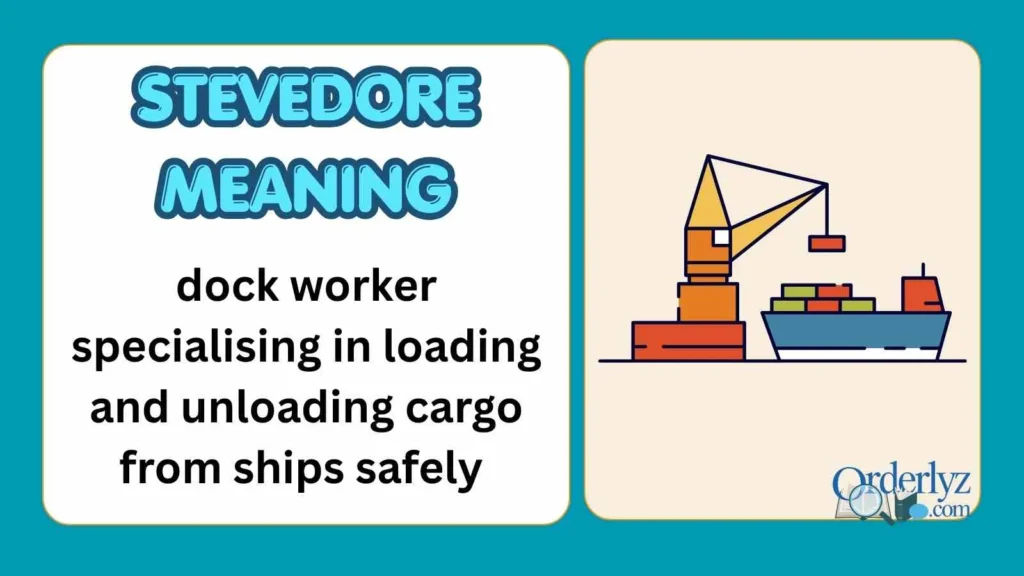
A stevedore is a dock worker specialising in loading and unloading cargo from ships safely and efficiently.
Origin of the Word
The term “stevedore” traces back to the following:
- Spanish: estibador
- Portuguese: estivador
Both words mean “one who stows cargo”. Over time, English adopted and slightly modified the term.
Evolution of Meaning
Originally, stevedores worked entirely manually—lifting, stacking, and organising goods. Today, while machines and cranes assist, the role still involves skilled coordination and logistics.
Pronunciation
‘Stevedore’ is pronounced as
STEE-vuh-dor
How to Use “Stevedore” Correctly in Texts & Chat
Tone & Context
The word is
- Professional in tone
- Common in maritime, logistics, and trade discussions
- Not typically used in casual slang or texting
Where You’ll See It
- News articles about shipping
- Logistics or supply chain discussions
- Historical or industrial contexts
Example Usage
- “The stevedore carefully loaded containers onto the ship.”
- “Modern stevedores use advanced equipment to speed up operations.”
When NOT to Use It
Avoid using “stevedore”:
- In casual chats (unless discussing jobs or history)
- As slang—it’s not internet shorthand
- In unrelated contexts (it’s industry-specific)
Real Conversation Examples Using “Stevedore”
1. Between Professionals
A: “Who’s managing cargo loading today?”
B: “The stevedore team is already on-site.”
👉 Conveys organisation and expertise in logistics.
2. Educational Context
Teacher: “A stevedore is essential in maritime trade.”
Student: “So they handle the cargo?”
👉 Shows learning and clarification.
3. Documentary or Media
Narrator: “Stevedores worked long hours unloading ships by hand.”
👉 Highlights historical labour intensity.
4. Workplace Discussion
Manager: “We need experienced stevedores for this shipment.”
👉 Implies skill and reliability.
5. Casual Learning Moment
Friend 1: “What’s a stevedore?”
Friend 2: “Basically a dock worker who loads ships.”
👉 Simplifies the meaning for everyday understanding.
Common Mistakes & Misunderstandings
1. Confusing It with “Dock Worker”
Not all dock workers are stevedores.
- Dock worker = general term
- Stevedore = cargo specialist
2. Thinking It’s Outdated
While it sounds old, the term is still actively used in shipping industries.
3. Misusing It in Casual Speech
You wouldn’t say:
❌ “I’m a stevedore of homework.”
It only applies to cargo and shipping contexts.
4. Generational Confusion
- Older generations may recognize it from labor history
- Younger audiences may rarely hear it unless studying trade or logistics
“Stevedore” Across Different Platforms & Demographics
Who Uses This Word?
- Professionals: Logistics, shipping, maritime industries
- Students: Geography, trade, or history fields
- Writers: Historical or industrial content
Platform Presence
- Rare on TikTok or Instagram captions
- Common in:
- News articles
- Documentaries
- LinkedIn posts in logistics fields
Formality Level
- Highly formal
- Safe for professional and academic use
Modern Relevance
Even with automation, stevedores remain essential for the following:
- Supervising cargo handling
- Operating heavy equipment
- Ensuring safety compliance
Related Slang, Abbreviations & Alternatives
| Term | Meaning |
|---|---|
| Dock Worker | General worker at a port |
| Longshoreman | Another term for cargo handler |
| Cargo Handler | Focuses on moving goods |
| Freight Worker | Handles transported goods |
| Loader | Loads items onto transport |
| Unloader | Removes cargo from vehicles |
| Port Worker | Broad term for harbor employees |
| Warehouse Worker | Handles goods in storage |
| Logistics Operator | Manages supply chain flow |
👉 Learn more about related terms like “longshoreman” and “cargo handler” for deeper understanding.
FAQs:
What does ‘stevedore’ mean in simple words?
A stevedore is someone who loads and unloads cargo from ships at a port. They ensure goods are handled safely and efficiently during transport.
Is ‘stevedore’ still a job today?
Yes, although technology has changed how work is done, stevedores are still needed to operate machinery, manage cargo, and oversee logistics.
What’s the difference between a stevedore and a longshoreman?
The terms are often used interchangeably, but “longshoreman” is more common in American English, while “stevedore” is more global and technical.
Is being a stevedore a difficult job?
It can be physically demanding and requires attention to safety, teamwork, and sometimes technical skills for operating equipment.
Can “stevedore” be used metaphorically?
Rarely. It’s mostly used literally in shipping contexts, though occasionally writers may use it creatively.
Conclusion:
The stevedore meaning might seem niche at first, but it represents a crucial role in global trade. These workers ensure that goods move efficiently across oceans, connecting economies worldwide.
While the word isn’t part of everyday slang, it carries weight in professional, historical, and educational contexts. Knowing how and when to use it gives you a sharper vocabulary edge.
Next time you see a cargo ship, remember—behind that massive operation is a team of skilled stevedores making it all happen.
👉 Got another word you’re curious about? Drop it below and keep expanding your vocabulary.

Hi, I’m Sophia Brownn, the creator behind Orderlyz.com, where words, meanings, and expressions are made simple, clear, and easy to understand.
I believe language shouldn’t feel confusing or overwhelming. In a world where new slang, trends, and expressions appear every day, my goal is to bring order to the chaos. I break down meanings in a way that feels natural, quick, and actually useful in real life conversations.