You wake up, check your smartwatch, and suddenly see the warning: “Your HRV is low today.”
Instant panic.
Does it mean you’re sick? Overtrained? Secretly becoming a stressed-out zombie powered entirely by caffeine and bad sleep?
The truth is, understanding low HRV meaning is less about one scary number and more about what your body is trying to tell you. Heart rate variability — usually shortened to HRV — has become one of the most talked-about wellness metrics in fitness, recovery, sleep tracking, and stress monitoring.
Athletes track it. Biohackers obsess over it. Even regular smartwatch users now stare at HRV charts like they’re decoding ancient prophecy.
In this guide, you’ll learn:
- What low HRV actually means
- Common causes behind sudden HRV drops
- Whether low HRV is dangerous
- How HRV differs by age and fitness level
- Real-life examples of low HRV situations
- Proven ways to improve your recovery and nervous system health
Updated for 2026, this is your complete beginner-friendly HRV guide.
What Does “Low HRV” Mean? (Definition + Origin)
Low HRV means your heart has less variation in time between beats than usual. In many cases, this suggests your body is under stress, fatigue, or recovery strain.
Despite the name, HRV is not about how fast your heart beats. It measures the tiny differences in timing between heartbeats.
For example:
- One heartbeat may occur after 0.9 seconds
- The next after 1.1 seconds
That variation is normal — and healthy.
Quick Answer
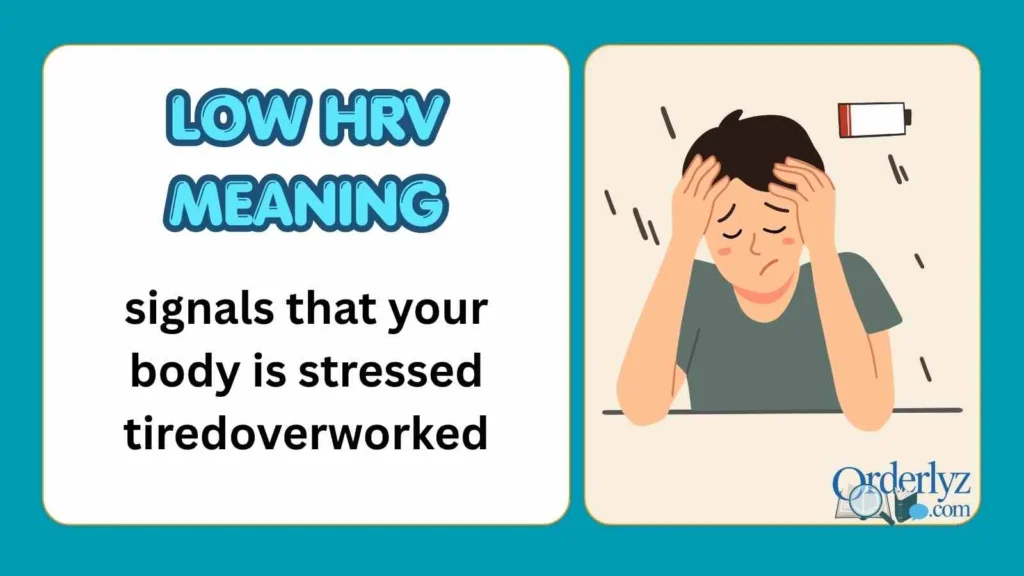
Low HRV usually signals that your body is stressed, tired, overworked, sick, or not fully recovered. It reflects reduced flexibility in your nervous system and can be influenced by sleep, exercise, anxiety, illness, alcohol, and lifestyle habits.
Understanding HRV in Simple Terms
Your heart is controlled partly by the autonomic nervous system, which has two main branches:
Sympathetic Nervous System
The “fight or flight” system.
Activated during:
- Stress
- Intense exercise
- Anxiety
- Illness
Parasympathetic Nervous System
The “rest and digest” system.
Activated during:
- Recovery
- Relaxation
- Deep sleep
- Calm states
A higher HRV generally suggests your body can switch flexibly between these systems.
A lower HRV may mean your body is stuck in stress-response mode.
Where Did HRV Tracking Become Popular?
HRV was originally studied in medical and sports science settings. Over time, wearable technology brought it mainstream.
Today, devices like:
- Apple Watch
- Fitbit
- Garmin
- Oura Ring
- WHOOP
track HRV automatically.
Social media fitness culture also boosted interest in HRV because people wanted better ways to measure it:
- Recovery
- Stress
- Sleep quality
- Training readiness
Pronunciation Guide
HRV is usually said as the following:
- “H-R-V”
- Or “Heart Rate Variability”
How to Use “Low HRV” Correctly in Health & Fitness Conversations
Unlike internet slang, low HRV is a health metric, so context matters a lot.
Common Ways People Use the Phrase
- “My HRV tanked after travelling.”
- “Low HRV usually means I’m getting sick.”
- “Alcohol destroys my HRV.”
- “My recovery score was bad because of low HRV.”
In most conversations, people use “low HRV” as shorthand for the following:
“My body is stressed.”
Common Situations Linked to Low HRV
Poor Sleep
One terrible night of sleep can noticeably lower HRV.
Especially:
- Interrupted sleep
- Late-night scrolling
- Sleep deprivation
Your nervous system notices everything.
Stress & Anxiety
Mental stress affects HRV heavily.
Deadlines, arguments, burnout, and chronic anxiety can all reduce heart rate variability.
Sometimes your smartwatch detects stress before you consciously feel it.
Creepy? A little.
Hard Training & Overtraining
Athletes often experience temporary low HRV after the following:
- Intense workouts
- Marathon training
- Heavy lifting
- Competitive events
Short-term dips are normal.
Constantly low HRV may suggest inadequate recovery.
Illness & Inflammation
Many people notice HRV drops:
- Before cold symptoms appear
- During infections
- While recovering from illness
That’s because your nervous system and immune system are closely connected.
Alcohol Consumption
This is one of the biggest HRV killers.
Even moderate drinking can:
- Lower HRV overnight
- Increase resting heart rate
- Disrupt recovery
Fitness trackers expose this brutally fast.
When NOT to Overreact to Low HRV
One low reading does not automatically mean the following:
- Disease
- Heart problems
- Medical emergencies
HRV changes daily.
Things like:
- Stress
- Travel
- Poor hydration
- Bad sleep
- Late meals
can temporarily lower it.
Trends matter more than isolated numbers.
Real-Life Examples of Low HRV
Here’s how low HRV shows up in everyday life.
Example 1: After a Hard Workout
Situation:
You crush leg day, sleep poorly, and wake up with low HRV.
Meaning:
Your body is recovering from physical stress.
Emotional Translation:
“Please stop destroying your hamstrings for 24 hours.”
Example 2: During High Work Stress
Situation:
You’re overwhelmed with deadlines for the week.
Your HRV drops steadily.
Meaning:
Mental stress impacts your nervous system just like physical strain.
Example 3: Before Getting Sick
Situation:
Your HRV suddenly crashes two days before cold symptoms appear.
Meaning:
Your immune system may already be fighting something.
Many wearable users notice this pattern.
Example 4: After Drinking Alcohol
Situation:
You had “just two drinks”.
Your wearable disagrees aggressively.
Meaning:
Alcohol often disrupts sleep and recovery more than people realise.
Example 5: Jet Lag & Travel
Situation:
Long flights + poor sleep + dehydration.
HRV drops sharply.
Meaning:
Travel stresses the nervous system even if you feel mentally fine.
Common Mistakes & Misunderstandings
Low HRV is one of the most misunderstood health metrics online.
1. Comparing Your HRV to Other People
This is the biggest mistake.
HRV varies massively between individuals.
Someone with:
- 25 ms HRV may be healthy
- Another person may naturally average 90 ms
Your baseline matters most.
2. Thinking Higher HRV Is Always Better
Generally, higher HRV is positive.
But obsessively chasing higher numbers can become unhealthy.
Context matters.
- Age
- Genetics
- Training load
- Lifestyle
All influence HRV naturally.
3. Panicking Over One Low Reading
HRV fluctuates daily.
A single low score usually means the following:
- Temporary stress
- Poor sleep
- Recovery strain
Long-term trends are more meaningful.
Generational Differences in HRV Awareness
Gen Z & Millennials
More familiar with HRV due to:
- Smartwatches
- Wellness TikTok
- Fitness apps
- Recovery culture
Older Generations
Some older adults may never have tracked HRV before wearable technology became mainstream.
Cultural Differences
HRV awareness is especially popular in:
- Fitness communities
- Endurance sports
- Biohacking spaces
- Mental wellness circles
Casual users may still confuse HRV with heart rate itself.
Low HRV Across Different Devices & Demographics
Apple Watch
Tracks HRV primarily during:
- Sleep
- Rest periods
- Mindfulness sessions
WHOOP & Oura Ring
These platforms heavily emphasise HRV for:
- Recovery scoring
- Strain management
- Sleep analysis
Garmin
Popular among runners and endurance athletes.
Garmin users often track HRV status trends over weeks.
Is Low HRV Dangerous?
Usually not by itself.
But chronically low HRV combined with:
- Poor sleep
- Constant fatigue
- High stress
- Health symptoms
may justify discussing concerns with a healthcare professional.
HRV and Age
HRV naturally decreases with age.
Younger people often have:
- Higher recovery capacity
- Higher HRV averages
That’s normal biology.
Related Health Metrics & Alternatives
| Metric | Meaning |
|---|---|
| Resting Heart Rate (RHR) | Heartbeats per minute at rest |
| VO₂ Max | Cardiovascular fitness estimate |
| Recovery Score | Overall readiness indicator |
| Sleep Score | Sleep quality measurement |
| Respiratory Rate | Breathing frequency |
| Stress Score | Nervous system strain estimate |
| Training Load | Workout intensity accumulation |
| Recovery Time | Suggested recovery period |
| Blood Oxygen (SpO₂). | Oxygen saturation measurement |
| Readiness Score | Daily energy/recovery estimate |
Related Terms
You may also want to learn about:
- “High HRV meaning”
- “HRV during illness”
- “Normal HRV by age”
- “Recovery score explained”
- “Resting heart rate vs HRV”
Helpful External Resource
For a deeper scientific background, the official resource from the Cleveland Clinic explains HRV in medically reviewed detail.
FAQs:
What does low HRV mean?
Low HRV usually means your body is experiencing stress, fatigue, illness, poor recovery, or nervous system strain. It reflects reduced variation between heartbeats.
Is low HRV bad?
Not always. Temporary low HRV is common after stress, workouts, travel, or poor sleep. Consistently low HRV over time may signal chronic stress or recovery issues.
Can anxiety cause low HRV?
Yes. Anxiety and chronic stress strongly affect the autonomic nervous system and can significantly reduce HRV.
What lowers HRV the fastest?
Common HRV disruptors include:
- Alcohol
- Poor sleep
- Illness
- Hard workouts
- Dehydration
- Emotional stress
Alcohol is especially notorious.
How can I improve my HRV naturally?
You can often improve HRV by:
- Sleeping consistently
- Managing stress
- Exercising intelligently
- Staying hydrated
- Reducing alcohol intake
- Prioritizing recovery
What is a healthy HRV range?
There’s no universal “perfect” HRV number. Healthy ranges vary based on age, genetics, fitness level, and device type. Your personal baseline matters more than comparison.
Conclusion:
Understanding low HRV meaning can make your smartwatch data far less intimidating.
Most of the time, low HRV simply means your body is under some form of stress — physical, mental, emotional, or environmental. It’s less of a panic button and more of a recovery signal.
The goal isn’t perfection.
It’s awareness.
Once you start noticing patterns between:
- Sleep
- Stress
- Exercise
- Alcohol
- Recovery
Your HRV becomes surprisingly useful.
And yes, your wearable absolutely knows when you stayed up too late scrolling.

Hi, I’m Sophia Brownn, the creator behind Orderlyz.com, where words, meanings, and expressions are made simple, clear, and easy to understand.
I believe language shouldn’t feel confusing or overwhelming. In a world where new slang, trends, and expressions appear every day, my goal is to bring order to the chaos. I break down meanings in a way that feels natural, quick, and actually useful in real life conversations.