Ever seen a crowd turn hostile in seconds—booing, mocking, and shouting insults? That’s where the word ‘jeer’ meaning comes into play. Whether it’s a sports match gone wrong, a viral video, or a heated online debate, “jeering” shows up everywhere in modern communication.
Understanding this word isn’t just about vocabulary—it’s about reading tone, emotion, and intent. Misreading it could make you sound harsh or misunderstand someone else’s message entirely.
In this guide (Updated for 2025), you’ll learn exactly what jeer means, how to use it naturally, where it fits in digital conversations, and how to avoid common mistakes. Let’s break it down in a way that actually sticks.
What Does “Jeer” Mean? (Definition + Origin)
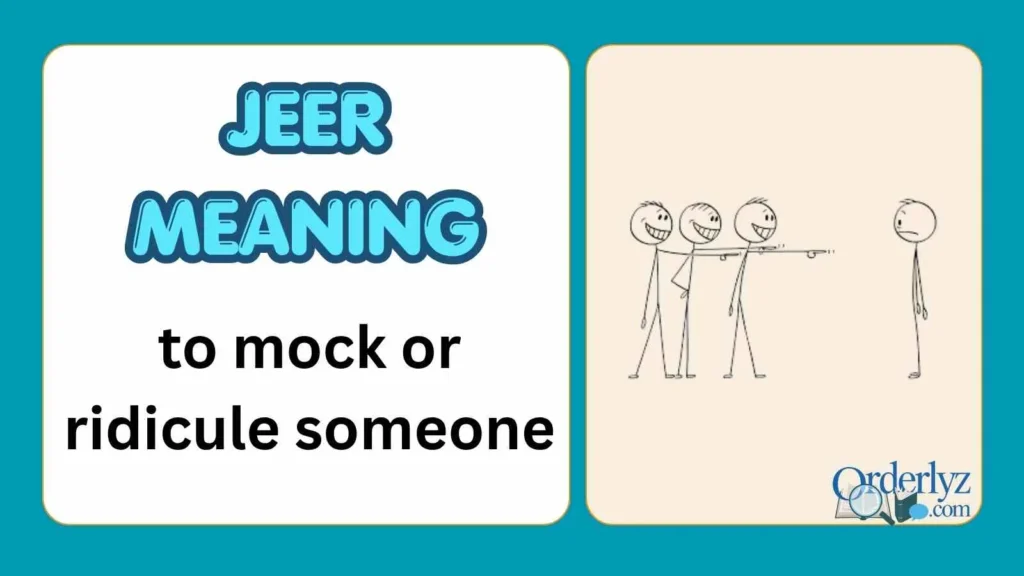
The ‘jeer’ meaning is simple:
To jeer means to mock, insult, or make fun of someone in a loud, rude, or sarcastic way.
It’s usually public and often meant to embarrass or criticise.
Quick Answer:
Jeer = to mock or ridicule someone loudly and disrespectfully
Origin of the Word
“Jeer” dates back to the 16th century, originally linked to expressions of contempt or scorn. Over time, it became strongly associated with crowds—especially in theatres, politics, and sports.
How It Evolved
- Then: Used mostly in public gatherings (e.g., crowds jeering actors)
- Now: Common in both real-life and digital spaces (comments, memes, chats)
Pronunciation
“Jeer” is pronounced as “jeer” (rhymes with “fear”)
How to Use “Jeer” Correctly in Texts & Chat
The word ‘jeer’ carries a strong negative tone, so context matters a lot.
Tone & Context
Use “jeer” when describing the following:
- Mocking behavior
- Public criticism
- Sarcastic or harsh reactions
Avoid it when:
- You mean friendly teasing
- You want a neutral tone
- You’re in professional communication
Platform-Specific Usage
- SMS / WhatsApp:
“Why are they jeering him? That’s harsh.” - Instagram / TikTok comments:
“People in the comments are just jeering now.” - Twitter/X:
“Instead of feedback, the crowd just jeered.” - Discord / Gaming:
“Don’t jeer at new players—help them instead.” - Reddit:
“The thread turned into pure jeering.”
Formatting Tips
- Usually lowercase: jeer
- Can be paired with tone indicators:
- 😒 (disapproval)
- 🙄 (sarcasm)
- Avoid overusing it—it sounds strong
Real Conversation Examples Using “Jeer”
1. Between Friends
A: Did you see that video?
B: Yeah, but the comments were just people jeering him.
👉 Emotion: Disapproval of online negativity
2. In a Group Chat
A: Why did the crowd react like that?
B: They started to jeer when he made a mistake.
👉 Emotion: Public embarrassment
3. Dating Scenario
A: My ex kept jeering at my hobbies.
B: That’s toxic behaviour.
👉 Emotion: Hurt and criticism
4. Workplace Chat
A: The presentation didn’t go well.
B: At least no one jeered—it could’ve been worse.
👉 Emotion: Relief with slight humor
5. Gaming Chat
Player 1: I’m new, chill!
Player 2: Sorry, no need to jeer.
👉 Emotion: Calling out negativity
Common Mistakes & Misunderstandings
1. Confusing Jeer with Joke
- ❌ “I was just jeering!”
- ✔️ If it’s friendly, say “joking” instead
Jeer is always negative—not playful.
2. Mixing Up Jeer and Cheer
- Jeer: Mocking
- Cheer: Supporting
They’re opposites but often confused due to similar spelling.
3. Overusing in Casual Chat
Using “jeer” too often can make you sound dramatic or overly harsh.
Generational Differences
- Gen Z: Uses it occasionally in commentary tone
- Millennials: More likely in storytelling
- Older users: Use it in formal or descriptive contexts
“Jeer” Across Different Platforms & Demographics
Gen Z vs Millennials
- Gen Z:
Uses “jeer” more metaphorically (online comments, memes) - Millennials:
Use it in real-world storytelling
Platform Popularity
- TikTok: Seen in comment criticism
- Instagram: Used in captions or reactions
- Discord: Used in moderation or gaming chats
Formality Level
- Not formal
- Not workplace-safe in direct usage
- Better for descriptive writing than direct speech
Related Slang, Abbreviations & Alternatives
Here are similar or related terms:
- Mock – Make fun of someone
- Taunt – Tease in a cruel way
- Ridicule – Laugh at disrespectfully
- Roast – Humorously insult (sometimes friendly)
- Boo – Crowd disapproval
- Troll – Online mocking behavior
- Diss – Disrespect someone
- Clown – Make someone look foolish
- Drag – Criticize harshly
- Flame – Attack verbally online
👉 Learn more about related slang like “roast meaning” or “troll meaning” for deeper understanding.
FAQs:
What does ‘jeer’ mean in texting?
In texting, jeer means mocking or insulting someone, often referring to how people react negatively in chats or comments.
Is ‘jeer’ always rude?
Yes, ‘jeer’ carries a negative tone. It implies disrespect or ridicule, not humour.
Can jeer be used in a positive way?
No, ‘jeer’ is inherently negative. Even in jokes, it sounds harsh.
What is a synonym for jeer?
Common synonyms include mock, taunt, ridicule, and insult.
How is ‘jeer’ used in real life?
It’s often used to describe crowds or groups reacting negatively, like fans jeering at a player.
Conclusion:
The ‘jeer’ meaning is all about mockery, ridicule, and public negativity. It’s not a light word—it carries emotional weight and should be used carefully.
In today’s digital world, where comments and reactions spread fast, recognising when someone is “jeering” helps you better understand tone and intent. It also helps you avoid coming across as harsh or disrespectful.
Want to sound smarter and more natural online? Start noticing how words like jeer shape conversations. And next time you see negativity online, you’ll know exactly what to call it.
👉 Drop your favourite slang term in the comments and keep the conversation going!

Hi, I’m Sophia Brownn, the creator behind Orderlyz.com, where words, meanings, and expressions are made simple, clear, and easy to understand.
I believe language shouldn’t feel confusing or overwhelming. In a world where new slang, trends, and expressions appear every day, my goal is to bring order to the chaos. I break down meanings in a way that feels natural, quick, and actually useful in real life conversations.