Ever been in a conversation where someone drops the word “pocho” and you’re left wondering if it’s a joke, an insult, or just slang? You’re not alone. The term pops up often in chats, memes, and cultural discussions—especially within Mexican and Mexican-American communities.
Understanding ‘pocho’ meaning today is more relevant than ever. With global communication, cultural blending, and social media shaping language fast, slang like this carries deeper identity and cultural nuance than you might expect.
In this guide (Updated for 2025), you’ll learn exactly what “pocho” means, where it came from, how to use it naturally, and when you should probably avoid it. Plus, we’ll break down real chat examples so you can confidently recognise—and use—it in context.
What Does “Pocho” Mean? (Definition + Origin)
“Pocho” meaning refers to a person—typically of Mexican origin—who has become culturally “Americanised”, often losing fluency in Spanish or traditional customs.
Quick Answer:
Pocho describes someone of Mexican descent who speaks imperfect Spanish or mixes it with English, often reflecting a blend of cultures.
Origin & Evolution
The word comes from Mexican Spanish, where “pocho” originally meant “faded”, “colourless”, or “diluted”. Over time, it evolved into a cultural descriptor.
- Early usage: Referred to something losing its original quality
- Modern slang: Refers to cultural or linguistic “blending”
- Popularised in Mexican-American communities, especially in the U.S.
Pronunciation
POH-choh (rhymes loosely with “no-go”)
How Meaning Has Changed
Today, the term isn’t always negative. It can be:
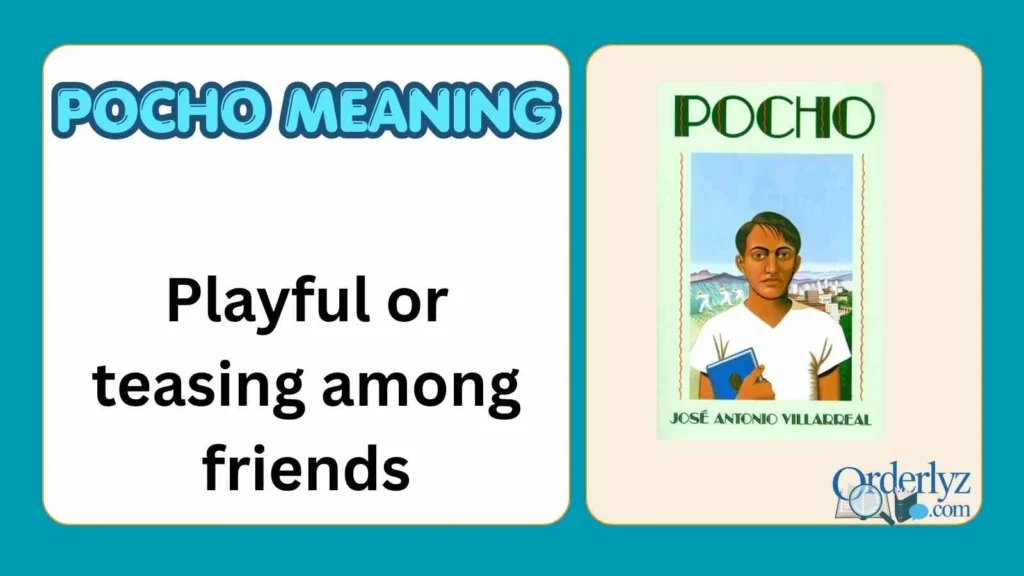
- Playful or teasing among friends
- A critique of cultural disconnection
- A neutral identity label in some communities
How to Use “Pocho” Correctly in Texts & Chat
Using the word ‘pocho’ meaning correctly depends heavily on context and tone.
Tone & Context
- Casual: ✔️ Works in friendly conversations
- Humorous: ✔️ Often used jokingly
- Critical: ⚠️ Can sound judgmental
- Formal settings: ❌ Avoid completely
Platform Usage
- WhatsApp / SMS: Common in casual chats
- Instagram / TikTok: Seen in captions or comments
- Discord / Reddit: Used in cultural discussions
- Twitter/X: Often appears in identity debates
When to Use It
- Talking about cultural identity
- Joking with friends about language mixing
- Describing bilingual struggles
When NOT to Use It
- Professional or workplace conversations
- With people you don’t know well
- In sensitive cultural discussions
Formatting Tips
- Lowercase: pocho (most common)
- No punctuation needed
- Often paired with emojis 😂🇲🇽
Real Conversation Examples Using “Pocho”
1. Between Friends
A: “Bro, you said ‘parquear’ instead of ‘estacionar’?”
B: “Yeah… I’m getting pocho.” 😭
👉 Emotion: Self-aware humor about language mixing
2. In a Group Chat
Friend 1: “Why is your Spanish so broken?”
Friend 2: “Stop, I’m pocho, okay? 😅”
👉 Emotion: Playful teasing, not serious
3. Family Conversation
Mom: “You need to practise your Spanish more.”
Son: “I know, I sound pocho now.”
👉 Emotion: Slight embarrassment or acknowledgment
4. Dating Scenario
Date: “You’re Mexican but don’t speak Spanish?”
Reply: “Yeah… kinda pocho, not gonna lie.”
👉 Emotion: Honest, slightly self-deprecating
5. Gaming Chat
Player 1: “Why are you mixing English and Spanish?”
Player 2: “Because I’m pocho, bro.” 😂
👉 Emotion: Casual, humorous identity expression
Common Mistakes & Misunderstandings
1. Assuming It’s Always Offensive
Not always. Tone matters. Among friends, it’s often harmless.
2. Using It With Strangers
Risky. Without context, it can sound insulting or dismissive.
3. Misinterpreting Cultural Meaning
Some think it only refers to language, but it also includes the following:
- Lifestyle
- Identity
- Cultural connection
Generational Differences
- Gen Z: Uses it casually and humorously
- Millennials: Mixed usage
- Older generations: More likely to view it negatively
Cultural Sensitivity
In some regions, it may carry stronger judgement. Always read the room.
“Pocho” Across Different Platforms & Demographics
Gen Z vs Millennials
- Gen Z: Embraces it as identity humor
- Millennials: More cautious usage
Social Media Trends
- TikTok: Used in bilingual humor videos
- Instagram: Appears in memes and captions
- Discord: Common in multicultural communities
Formality
- ❌ Not formal
- ❌ Not workplace-safe
- ✔️ Informal, cultural slang
Viral Influence
The term gained traction through the following:
- Latino TikTok creators
- Meme culture about bilingual struggles
- Cross-cultural humor online
Related Slang, Abbreviations & Alternatives
| Term | Meaning |
|---|---|
| Spanglish | Mixing Spanish and English |
| Gringo | Foreigner, especially American |
| Chicano | Mexican-American identity |
| No sabo kid | Someone who struggles with Spanish |
| Paisa | Someone from rural Mexico |
| FOB (Fresh Off the Boat) | Newly immigrated person |
| Americanized | Adopted U.S. culture |
| Bilingual struggle | Humor about language mixing |
FAQs:
What does ‘pocho’ mean in texting?
In texting, ‘pocho’ meaning refers to someone joking about mixing English and Spanish or not speaking Spanish fluently.
Is pocho a bad word?
Not necessarily. It depends on tone. Among friends, it’s often playful, but it can sound critical in serious contexts.
Can you call yourself pocho?
Yes, many people use it self-referentially in a humorous or honest way about their identity.
Is pocho only about language?
No. It can also refer to cultural habits, identity, and lifestyle—not just language skills.
Why is pocho popular online?
Because it reflects real experiences of bilingual and multicultural communities, especially among younger generations.
Conclusion:
Language is evolving faster than ever, and ‘pocho’ meaning sits right at the intersection of culture, identity, and humour. It’s more than just slang—it tells a story about belonging, adaptation, and sometimes even insecurity.
Used right, it can be funny, relatable, and even empowering. Used wrong, it might come off as dismissive or judgemental. Context is everything.
Now that you know how to use it, spot it, and understand it, you’re officially in the loop.
👉 Got a favourite slang word? Drop it in the comments and keep the conversation going!

Hi, I’m Sophia Brownn, the creator behind Orderlyz.com, where words, meanings, and expressions are made simple, clear, and easy to understand.
I believe language shouldn’t feel confusing or overwhelming. In a world where new slang, trends, and expressions appear every day, my goal is to bring order to the chaos. I break down meanings in a way that feels natural, quick, and actually useful in real life conversations.